

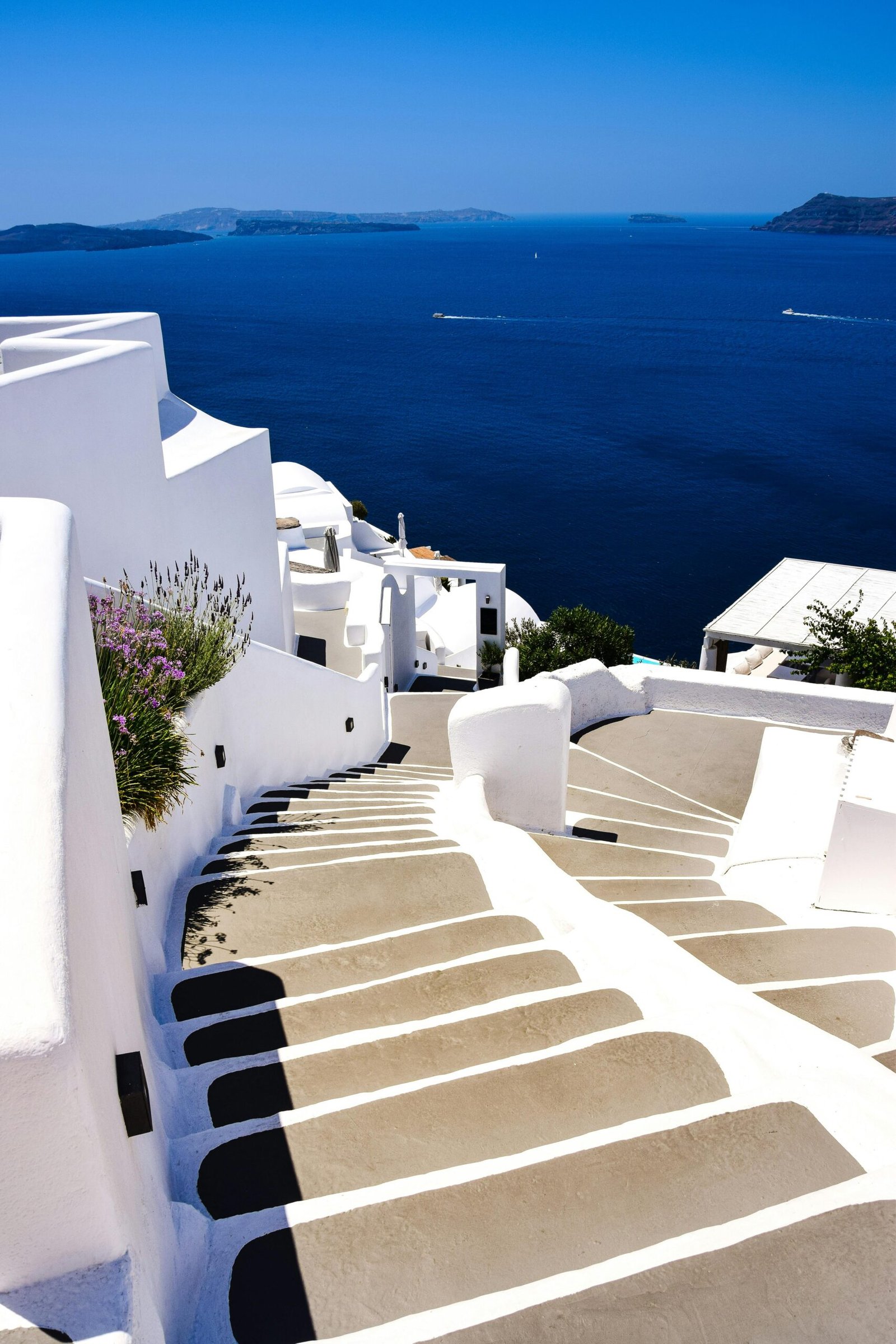
Why Most First-Timers to Santorini Leave Slightly Disappointed usually comes down to one thing: people arrive carrying an image, not a working expectation. They have seen the same cliffside views, whitewashed lanes, and blue-domed photos so many times that they assume the island will deliver that feeling on command.
The disappointment is rarely dramatic. It is more often a quiet mismatch between what travelers thought Santorini would feel like and what peak season actually delivers: crowds, heat, high prices, and a lot of time spent managing access, timing, and expectations.
Why Most First-Timers to Santorini Leave Slightly Disappointed
The pattern is simple and very common: travelers choose Santorini because they want certainty. They want the classic Greece image, the famous caldera, the easy bragging rights, and the reassurance that they picked the “right” island. That emotional need for certainty is exactly why Why Most First-Timers to Santorini Leave Slightly Disappointed is such a reliable outcome in peak season.
People do not just book Santorini for the scenery. They book it because it feels safe to choose the most recognized Greek island. For first-timers, that recognition reduces anxiety: no one wants to be the person who picked the wrong place and missed the obvious one. The problem is that popularity creates pressure, and pressure is a bad way to evaluate a destination that is heavily shaped by season and crowd density.
The psychology behind Why Most First-Timers to Santorini Leave Slightly Disappointed
Santorini attracts travelers who want a clean emotional payoff. They want to feel that the trip was worth the money, the planning, and the anticipation, and they assume the island will deliver that payoff in every moment. That assumption is fragile because Santorini is not designed to feel intimate when it is full.
There is also a status element that people rarely admit out loud. Santorini is one of the few Greek destinations that still carries social proof in the strongest sense: friends have been, social media has reinforced it, and travel culture has turned it into a default answer. So travelers often choose it to avoid regret, not because it is the best match for how they actually like to travel.
That is where Why Most First-Timers to Santorini Leave Slightly Disappointed becomes predictable. The island is not failing to be beautiful; the visitor is failing to account for the emotional cost of visiting a place that has been marketed into a near-symbol rather than a normal destination. When the symbol meets the reality of crowds and compressed demand, the gap is obvious.
What travelers expect versus what peak season actually gives them
Most first-timers expect an island that feels composed and cinematic from the moment they arrive. They imagine a calm sequence of views, meals, and sunsets that all seem to justify the price tag. What they often get instead is a place that requires patience, advance thinking, and a tolerance for friction.
Peak season changes the emotional texture of Santorini. The island becomes less about lingering and more about managing access to the same few high-demand viewpoints, restaurants, and terraces. Even travelers who dislike crowds tell themselves they will “work around it,” then spend the trip negotiating with everyone else who had the same idea.
The real letdown is not that Santorini is overhyped. The real letdown is that travelers expect the island to protect them from the stress that comes with being one of the most desired places in Greece. It does not. If you want a broader sense of how Greece is presented versus how it is actually experienced,
Visit Greece is useful as a starting point, but it should never be mistaken for the full operating reality of peak-season travel.
The moment disappointment usually hits
For most people, the emotional drop happens at sunset. Not because the sunset is bad. It is because the sunset becomes the entire mission, and the mission is crowded, performative, and harder to enjoy than the photos suggest. The traveler realizes they are not having a private moment with the island; they are sharing it with a lot of strangers who also paid too much to be there.
That is the moment when the mental model breaks. The traveler thought they were buying an experience of calm prestige, but what they actually bought was access to a very famous view under peak demand. Once that clicks, a lot of the trip starts to feel expensive in a way that is hard to ignore.
There is a second common moment, and it is more practical than emotional: the first time a traveler notices how much of the day is organized around avoiding bottlenecks. Suddenly the island feels less effortless than expected. The disappointment is not about one bad dinner or one crowded terrace. It is the accumulation of small frictions that make the trip feel managed instead of lived.
The traveler types most prone to this pattern
First are the first-time Greece visitors who want the easiest possible win. They are often not wrong to choose a famous island, but they are vulnerable to disappointment because they are using Santorini as a confidence-building decision. If the island does not feel smooth, they take that personally.
Second are couples chasing a milestone trip. They often arrive with a strong emotional script: romance, privacy, and a sense that the destination will do the work for them. Santorini can support that, but in peak season it can also feel overly curated and crowded, which is a poor fit for travelers who need solitude to feel connected.
Third are luxury travelers who assume a higher budget will solve the problem. This is where I take a clear position: money alone does not fix Santorini in peak season. You can buy better positioning, better service, and better comfort, but you cannot buy back the island’s demand curve. If your expectation is effortless exclusivity, Santorini will probably underdeliver.
- Travelers who are highly image-driven and want the trip to look as good as it feels
- People who dislike crowds but still choose the most famous option
- Couples expecting privacy to be automatic
- Visitors who equate higher spending with a guaranteed better experience
Why the island’s image is stronger than the experience
Santorini has a branding problem created by its own success. The image is so strong that it crowds out nuance, and nuance matters more than people think. A destination that looks incredible in a single frame can still feel tiring over several days if it is heavily saturated with visitors and expectations.
This is also why some travelers leave saying, “It was beautiful, but…” That sentence is the whole story. The island delivered the visual proof they came for, but not the emotional ease they assumed would come with it. In Greece, that distinction matters more than most first-timers realize.
And yes, the island can still be worth visiting. But worth visiting is not the same as satisfying in the way people imagine before they go. Santorini is one of the clearest examples of how a destination can be objectively impressive and still feel slightly disappointing if the traveler is chasing a mood that peak season cannot reliably provide.
How to approach Santorini differently
The better approach is to stop asking Santorini to be a general-purpose Greek island and start treating it as a high-demand, high-expectation destination with real constraints. That shift sounds minor, but it changes everything. You stop expecting ease to appear naturally, and you start valuing what the island does well without demanding that it do everything else too.
Greece rewards travelers who arrive with a plan, but only when that plan is built around reality rather than fantasy. For Santorini, that means understanding that peak season amplifies every mismatch between image and experience. If you want romance, choose the kind that can survive crowds. If you want quiet, do not pretend the most famous island in Greece will behave like a private retreat.
If you want a more grounded view of how Greek culture, heritage, and place actually function beyond the postcard version, the Hellenic Ministry of Culture is a useful reminder that Greece is not a backdrop. It is a living country with real pressures, real seasonality, and real trade-offs. That context matters when you are deciding whether Santorini is the right first island, or just the most obvious one.
What a better first-time Santorini decision looks like
A better decision starts with honesty about your motive. If you want the iconic view and you are comfortable paying for it in crowd tolerance, timing stress, and a more managed experience, Santorini can still make sense. If you want ease, space, and a relaxed emotional rhythm, you are probably choosing it for the wrong reasons.
The travelers who are happiest in Santorini are usually the ones who understand it as a concentrated experience, not a universally satisfying one. They do not expect the island to be quiet just because it is expensive. They do not confuse popularity with personal fit.
That is the real reframe: do not ask whether Santorini is good. Ask whether your reason for choosing it can survive peak season without turning into resentment. That question will save you more disappointment than any list of “must-sees.”
Greece doesn’t punish inexperience. It punishes unexamined assumptions. The travelers who leave disappointed rarely lacked information — they lacked a framework for using it.
Frequently asked questions
Why do so many first-time visitors feel underwhelmed in Santorini?
Because they arrive expecting an effortless version of the island that peak season rarely delivers. The view is real, but so are the crowds, the price pressure, and the amount of planning required to make the trip feel smooth.
Is Santorini overrated for first-time visitors?
Not exactly. It is better described as overimagined. The island delivers on the visual reputation, but many first-timers expect that reputation to translate into a calmer, more private experience than the season allows.
What is the biggest mistake people make when choosing Santorini?
They choose it for certainty rather than fit. They want the safest, most recognizable Greek island, then feel disappointed when the experience does not match the emotional script they brought with them.
Who is most likely to be disappointed by Santorini?
Travelers who dislike crowds, couples expecting privacy to happen automatically, and people who think a higher budget guarantees a better emotional experience. Santorini can work for them, but only if expectations are realistic.
Does spending more money fix the Santorini experience?
It improves comfort, but it does not remove the core pressure of peak season. You can buy better service and better positioning, but you cannot buy an uncrowded island.
What mindset makes Santorini more enjoyable?
Treat it as a high-demand destination with trade-offs, not as a guaranteed romantic escape. Once travelers stop expecting the island to feel private and effortless, they usually appreciate it more.