

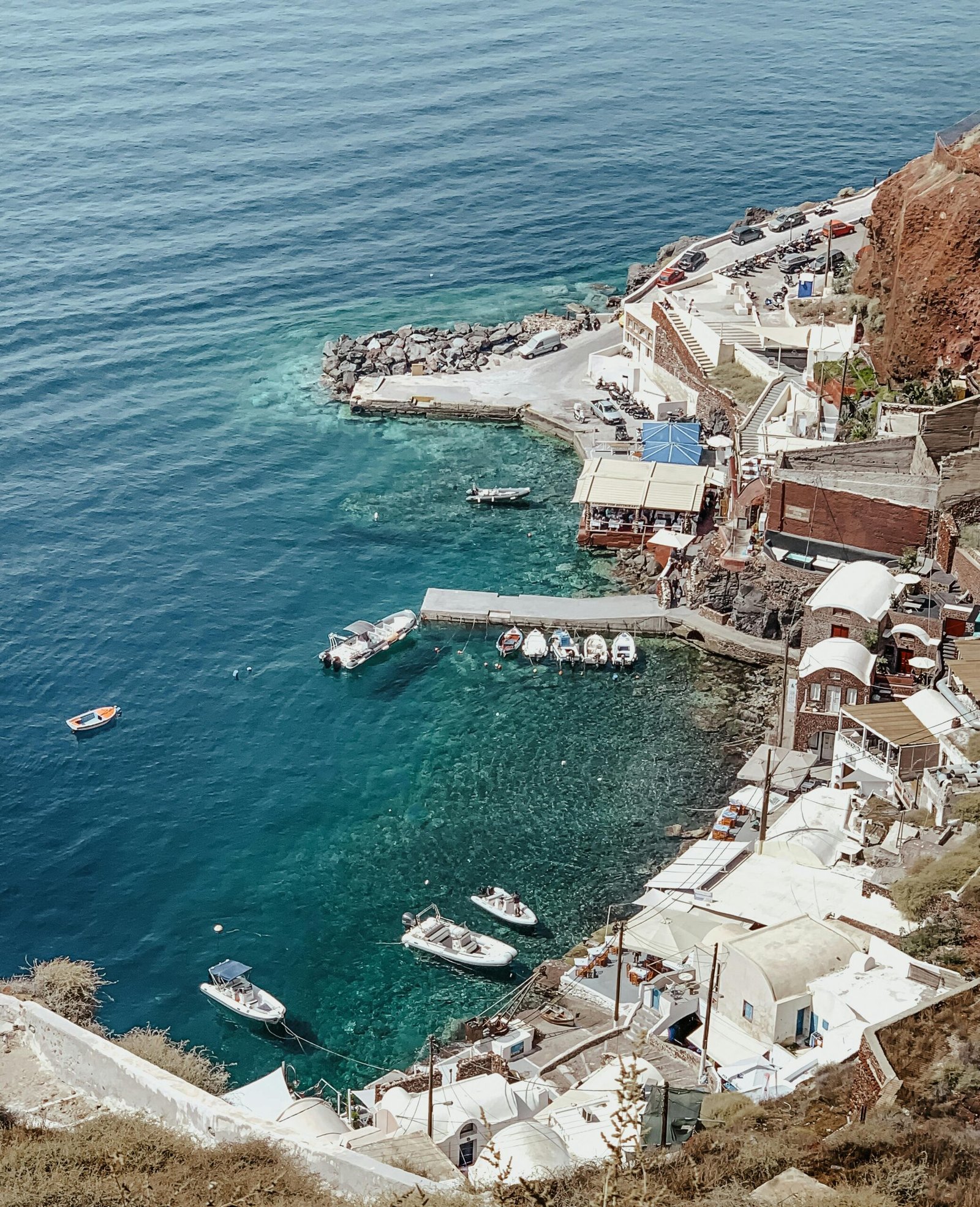
Why Most First-Timers to Santorini Leave Slightly Disappointed starts with a very common assumption: that the island will deliver the exact feeling people have already built in their heads. Most travelers are not choosing Santorini for practical reasons. They are choosing it because they want the version they have seen in photos, and that is where the trouble begins.
The disappointment is usually not dramatic. It is quieter than that. You arrive expecting a clean emotional payoff and instead run into crowds, heat, inflated prices, and the basic fact that a famous place is still a working destination with limits.
Why Most First-Timers to Santorini Leave Slightly Disappointed
The pattern is simple: people confuse a destination image with a destination experience. Santorini is one of the clearest examples in Greece because its brand is stronger than its day-to-day reality, especially in peak season. Why Most First-Timers to Santorini Leave Slightly Disappointed is not a mystery to operators; it is what happens when expectation is built from social media, not from how the island actually functions.
The real reason people choose Santorini
Most first-timers are not choosing Santorini because they have studied the island. They are choosing it because it feels like the safest “special trip” decision. It signals romance, status, and a once-in-a-lifetime experience, which is exactly why people are willing to pay more and tolerate more friction than they would anywhere else.
That emotional logic matters. When travelers spend heavily on a place, they expect the trip to validate the spend every hour of the day. Santorini rarely does that, and the gap between “this should feel extraordinary” and “this is just very busy” is where disappointment starts.
Why Most First-Timers to Santorini Leave Slightly Disappointed in peak season
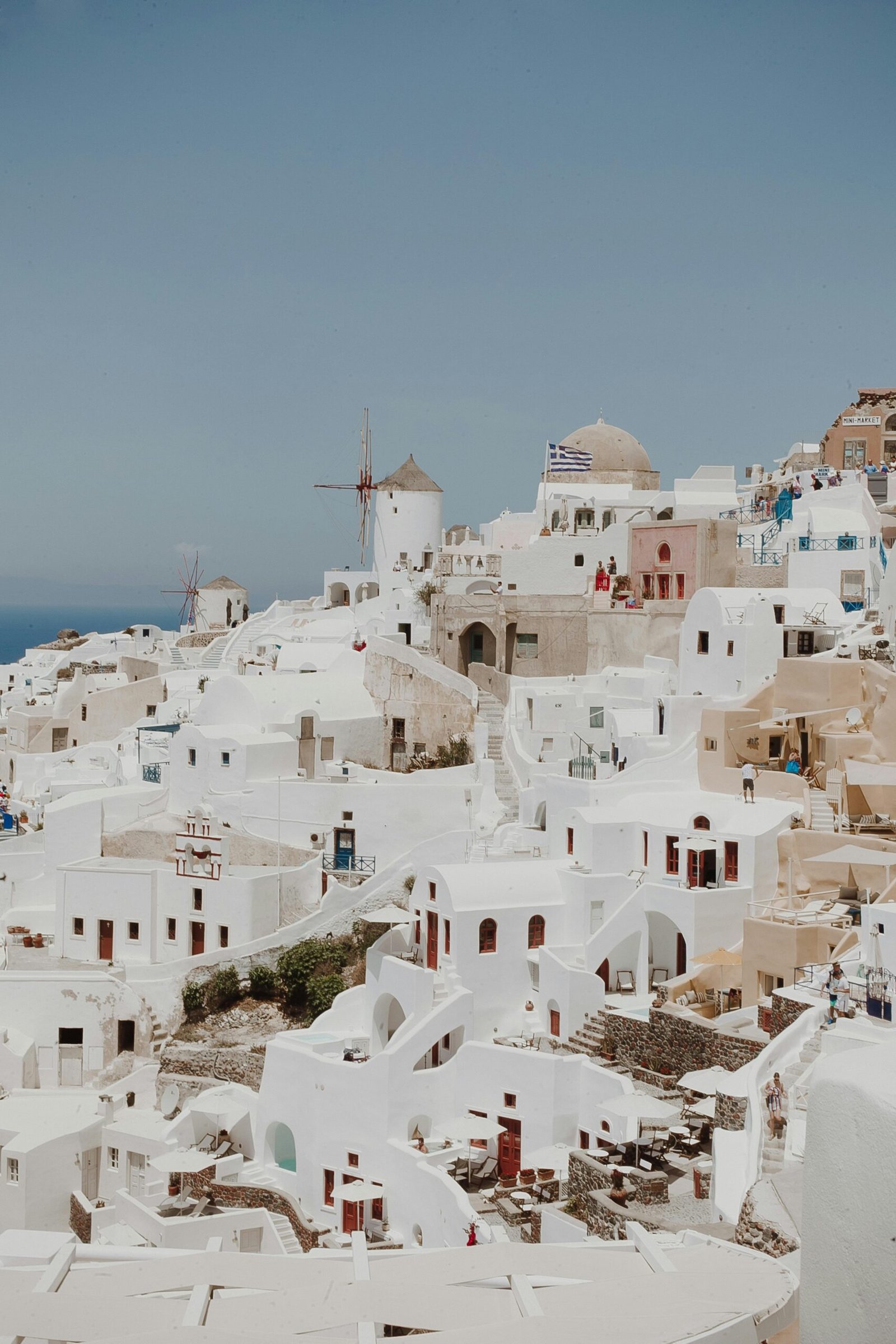
Peak season changes the island’s character. Streets that look serene in photos become crowded, viewpoints become shared public stages, and even simple moments start to feel scheduled around everyone else. The island does not stop being beautiful, but the experience becomes more managed, more compressed, and less personal.
Here is the counterintuitive part: many first-timers are not disappointed because Santorini is overrated. They are disappointed because it is famous for the exact things that are hardest to enjoy when the island is full. The view is still there, but the emotional space to enjoy it has been stripped away by noise, queues, and constant movement.
Greece rewards travelers who arrive with a plan, but Santorini punishes the fantasy that a famous place will feel effortless simply because it is famous. If you want a quieter read on the island’s cultural context, start with the
official tourism information for Greece and use that as a baseline, not as a promise.
The emotional gap: what people expect versus what they get
Travelers expect Santorini to feel like a reward. What they often get is a performance environment where every premium comes with a crowd attached. The room may be beautiful, the caldera view may be exactly what they imagined, and still the overall feeling can be flat because the island has become so optimized around visitor demand.
The problem is not one bad moment. It is the accumulation of small frictions that chip away at the fantasy. A long wait, a loud terrace, an overpriced meal that feels interchangeable, and the realization that you are sharing the same “exclusive” view with hundreds of other people can turn anticipation into mild irritation very quickly.
The moment disappointment usually hits
For many first-timers, the shift happens in the first 24 hours. It is rarely the arrival itself. It is the moment they realize the island is not going to give them uninterrupted calm, and that every iconic viewpoint is also a public gathering place.
That is when the emotional math changes. Travelers who expected Santorini to feel intimate start seeing it as crowded and curated. Travelers who expected luxury start noticing how much effort it takes to access the version of luxury they thought was standard.
The traveler types most prone to this pattern
Some travelers are far more vulnerable to Santorini disappointment than others. The people most likely to leave underwhelmed are usually the ones who want the trip to confirm a preexisting fantasy, not challenge it.
- First-time Greece visitors who want one “big name” island and assume the famous one must be the best one.
- Couples planning a milestone trip who are emotionally invested in the destination living up to the occasion.
- Travelers who rely heavily on curated photos and do not factor in seasonality, crowds, or price inflation.
- People who are sensitive to friction and expect a premium destination to feel seamless at every point.
These travelers are not wrong to want something memorable. They are just more likely to interpret normal peak-season congestion as a failure of the destination itself. In reality, the issue is usually a mismatch between the emotional job they assigned to Santorini and the way the island actually operates.
What most people underestimate before they book
They underestimate how much the island’s image shapes their own expectations. Santorini is not just a place; it is a visual shorthand for romance, luxury, and Greek island travel in general. That makes it easy to overvalue it and then feel let down when the lived experience is more complicated than the marketing.
They also underestimate how quickly novelty wears off in a crowded place. A famous view can still be impressive, but if every other part of the day feels expensive, busy, or repetitive, the emotional return drops fast. That is why some travelers leave saying the island was “fine” when what they really mean is that it never became personal.
For travelers who want a broader sense of Greece beyond one famous island, the Ministry of Culture and Sports is a useful reminder that Greece is not a single postcard experience. Santorini is one expression of the country, not the whole thing.
How to approach Santorini differently
The better approach is not to expect less in a cynical way. It is to want the island for what it actually is: a high-demand, high-visibility destination that can still be rewarding if you understand its limits. That means treating the famous view as one part of the trip, not the entire emotional payoff.
If you are honest about your travel style, Santorini can still work. But if you need quiet, spontaneity, and a feeling of discovery, this is not the island to build your whole Greece trip around. The mistake is not loving Santorini; the mistake is asking it to be something it is not.
Recognizing the pattern is the first step. The second is building a trip around how you actually travel — not the traveler you imagine yourself to be. Most great Greece experiences start with that honesty.
FAQ
Is Santorini still worth visiting for first-timers?
Yes, if you understand what you are paying for. Santorini is worth visiting for its scenery and its status as a major Greece destination, but it is not the best choice for travelers who want calm, value, or a low-friction island experience.
Why do so many people feel underwhelmed by Santorini?
Because the island’s image is stronger than the reality of visiting it in peak season. Crowds, high prices, and constant visitor traffic make the experience feel less exclusive than people expect.
Is the disappointment mostly about crowds?
Crowds are a big part of it, but not the whole story. The deeper issue is expectation mismatch: travelers imagine a seamless, luxurious, emotionally charged experience and then find a place that is heavily visited and commercially intense.
Who is Santorini best suited for?
It suits travelers who care a lot about iconic scenery, premium stays, and the social value of visiting a famous Greek island. It suits them best when they are not expecting privacy or a slow-paced island rhythm.
What is the biggest mistake first-timers make?
They make Santorini the emotional center of the whole Greece trip. That puts too much pressure on one destination to deliver romance, relaxation, and novelty all at once.
How can I avoid leaving disappointed?
Go in knowing that Santorini is a high-demand destination with real trade-offs. If you treat it as one part of a wider Greece trip instead of the whole point, the experience is usually more satisfying.
Should I choose a different island instead?
If you want less crowd pressure and more room to breathe, yes, probably. Santorini is not the wrong choice for everyone, but it is the wrong choice for many travelers who are mainly chasing a feeling rather than a specific place.
Frequently asked questions
Is Santorini still worth visiting for first-timers?
Yes, if you understand what you are paying for. Santorini is worth visiting for its scenery and its status as a major Greece destination, but it is not the best choice for travelers who want calm, value, or a low-friction island experience.
Why do so many people feel underwhelmed by Santorini?
Because the island’s image is stronger than the reality of visiting it in peak season. Crowds, high prices, and constant visitor traffic make the experience feel less exclusive than people expect.
Is the disappointment mostly about crowds?
Crowds are a big part of it, but not the whole story. The deeper issue is expectation mismatch: travelers imagine a seamless, luxurious, emotionally charged experience and then find a place that is heavily visited and commercially intense.
Who is Santorini best suited for?
It suits travelers who care a lot about iconic scenery, premium stays, and the social value of visiting a famous Greek island. It suits them best when they are not expecting privacy or a slow-paced island rhythm.
What is the biggest mistake first-timers make?
They make Santorini the emotional center of the whole Greece trip. That puts too much pressure on one destination to deliver romance, relaxation, and novelty all at once.
How can I avoid leaving disappointed?
Go in knowing that Santorini is a high-demand destination with real trade-offs. If you treat it as one part of a wider Greece trip instead of the whole point, the experience is usually more satisfying.
Should I choose a different island instead?
If you want less crowd pressure and more room to breathe, yes, probably. Santorini is not the wrong choice for everyone, but it is the wrong choice for many travelers who are mainly chasing a feeling rather than a specific place.