

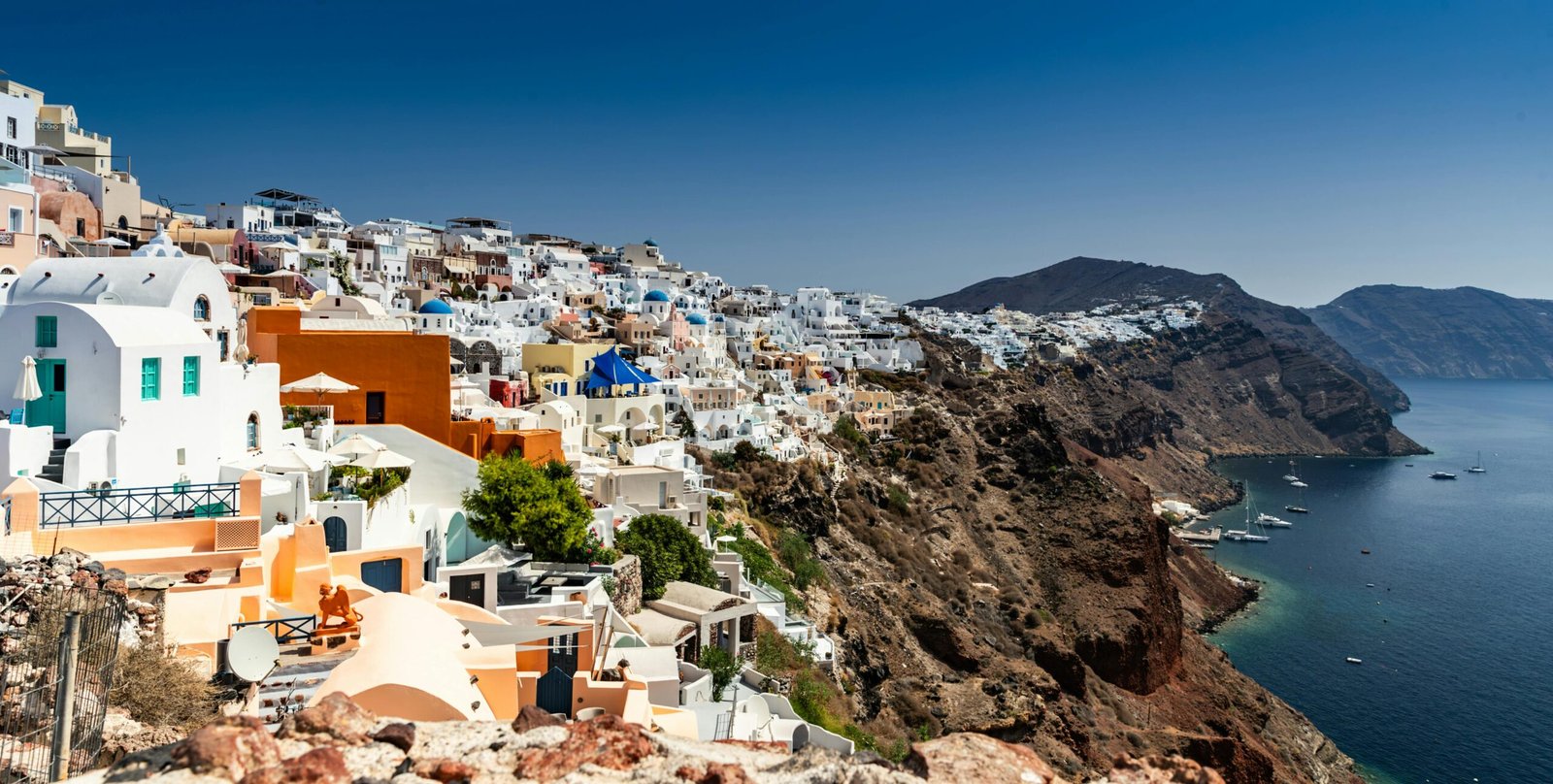
Why Most First-Timers to Santorini Leave Slightly Disappointed is usually not a problem of taste. It is a problem of expectation: people arrive with a polished image of the island and then meet a place that is crowded, expensive, and far less private than they assumed.
The disappointment is rarely dramatic. It is more often a slow realization that the version of Santorini they were chasing was built from photos, not from the actual experience of being there in peak season.
Why Most First-Timers to Santorini Leave Slightly Disappointed
The assumption behind the trip: that Santorini is a feeling, not a place
The first mistake is emotional, not logistical. Travelers do not choose Santorini because they want an island; they choose it because they want a certain outcome: romance, status, proof that they picked the right Greek island, and a clean visual memory that looks like the internet version.
That is why Why Most First-Timers to Santorini Leave Slightly Disappointed is such a useful question. The island is carrying a job it was never designed to do. It is expected to deliver privacy, ease, and cinematic calm in the middle of a place that is heavily visited, tightly built, and under constant pressure in summer.
People are not wrong to want beauty. They are wrong to assume beauty automatically means comfort. Santorini can be impressive and still feel crowded, expensive, and oddly transactional once you are actually there.
Why Most First-Timers to Santorini Leave Slightly Disappointed in peak season
Peak season changes the emotional math. The island that looked serene in photos becomes a place where you are constantly negotiating space, timing, and patience. That is the moment many first-timers realize they were not planning a trip to Santorini; they were planning a mood.
The gap shows up in small ways first. A view that looked private turns out to be shared with a line of strangers. A dinner reservation feels less like a special night and more like a timed slot. Even the simplest movement through the island can feel like you are working around other people’s expectations of the same experience.
This is where Why Most First-Timers to Santorini Leave Slightly Disappointed becomes obvious in real life. The issue is not that Santorini is overrated. The issue is that peak-season Santorini is a high-demand, high-cost environment, and many travelers arrive expecting a relaxed island rhythm that simply is not there in the places they most want to be.
The emotional gap: what travelers expect versus what they actually feel
Before the trip, people imagine relief. They think Santorini will simplify things: one iconic destination, one easy emotional payoff, one place where every decision feels obviously correct. That is a powerful fantasy, especially for couples and first-time Greece visitors who want the trip to feel meaningful without requiring much effort.
What they actually feel is more mixed. There is excitement, of course, but also pressure to make the trip “worth it,” which is a dangerous mindset. Once a traveler starts measuring every meal, view, and sunset against an internal benchmark, the whole experience becomes a performance review.
That emotional pressure is why disappointment often arrives even when the trip is objectively good. Santorini does not fail people in a dramatic way. It disappoints by not matching the emotional script they brought with them.
The specific moment when the disappointment usually hits
It usually hits when the traveler realizes the island is not giving them uninterrupted access to the thing they came for. That might be the view, the sunset, the quiet, or the sense of exclusivity. The exact trigger varies, but the pattern is the same: the fantasy depended on control, and Santorini does not offer much of that in peak season.
For some, the moment comes when they see how many other people had the same idea. For others, it is the first time they notice how much of the day is spent waiting, adjusting, or paying more than expected for less privacy than expected. That is the point where the trip stops feeling like a reward and starts feeling like a correction.
Clear position: if your main goal is a calm, low-friction Greek island experience, Santorini in peak season is the wrong choice. Not a slightly imperfect choice. The wrong one.
Who is most prone to this pattern
First-time Greece visitors are the most vulnerable because they often treat Santorini as the default answer. They have seen it everywhere, so they assume it is the safest choice. In reality, popularity is not the same thing as suitability.
Couples are especially prone to disappointment when they are chasing a symbolic trip: honeymoon energy, anniversary energy, proposal energy. The island can support that, but it does not guarantee it. If the emotional success of the trip depends on feeling secluded and special at all times, the pressure will be too high.
Social-media-driven travelers are another predictable group. They are not necessarily shallow; they are just working from a visual template. The problem is that a visual template does not prepare you for crowds, heat, prices, or the ordinary friction of being in a place that is famous for being famous.
Travelers who want “one perfect Greek island” are also at risk. That phrase usually means they want certainty, and Greece rarely works that way. If you want a broader sense of how the country actually works as a destination, the official tourism overview at
Visit Greece is a better starting point than a feed full of sunset photos.
What people consistently underestimate about Santorini
They underestimate how much the island is shaped by other visitors. That sounds obvious, but most first-timers still imagine their own experience will somehow be insulated from the crowd. It will not be.
They also underestimate how much money changes the emotional tone of the trip. When every choice feels expensive, people become more sensitive, less flexible, and more likely to judge the island harshly. That is not a moral failing. It is a predictable response to feeling overcharged.
Another underappreciated factor is that Santorini is not trying to be all things to all travelers. It is a destination with a very specific appeal, and once you force it into a broader fantasy, the mismatch becomes your problem. If you want a trip that feels more grounded in Greek culture rather than image, start by understanding the wider context through the Ministry of Culture at culture.gov.gr.
How to approach Santorini differently
The better approach is to stop asking whether Santorini is “worth it” in the abstract. Ask what role you want it to play in the trip. If you want one dramatic, high-recognition stop and you accept the trade-offs, Santorini can still make sense.
If you want ease, space, and a more relaxed emotional pace, do not force Santorini to become that place. That is how people end up disappointed and then blame the island for failing a job they assigned to it.
Greece rewards travelers who arrive with a plan, but more importantly, it rewards travelers who know what kind of experience they are actually buying. Santorini is not a mistake. The mistake is expecting it to be something it is not.
Why Most First-Timers to Santorini Leave Slightly Disappointed is really a lesson in self-awareness. Once you see the pattern, you can choose differently: not less ambitiously, just more honestly.
Greece doesn’t punish inexperience. It punishes unexamined assumptions. The travelers who leave disappointed rarely lacked information — they lacked a framework for using it.
Frequently asked questions
Why do first-time visitors often feel underwhelmed by Santorini?
Because they arrive expecting a private, effortless, romantic island experience and meet a crowded, expensive, high-demand destination instead. The gap between image and reality is what creates the letdown.
Is Santorini actually disappointing, or are expectations just too high?
Usually the expectations are too high. Santorini is a strong destination for the right traveler, but it is often sold as a universal must-do, which it is not.
What is the biggest mistake first-timers make with Santorini?
They treat it like a guaranteed emotional experience rather than a place with real seasonal pressure, crowds, and trade-offs. That assumption causes most of the frustration.
Who should still choose Santorini?
Travelers who want a high-profile Greek island and are comfortable paying more for a concentrated, busy experience. It works better for people who accept the trade-offs up front.
When does disappointment usually start?
It often starts once travelers realize they are sharing the island with far more people than they expected, especially around the most famous viewpoints and in peak season.
How can someone avoid leaving Santorini disappointed?
By being honest about what they want from the trip. If the goal is calm, space, and low friction, Santorini is probably the wrong fit. If the goal is a famous, high-impact stop with clear trade-offs, the experience is easier to accept.