

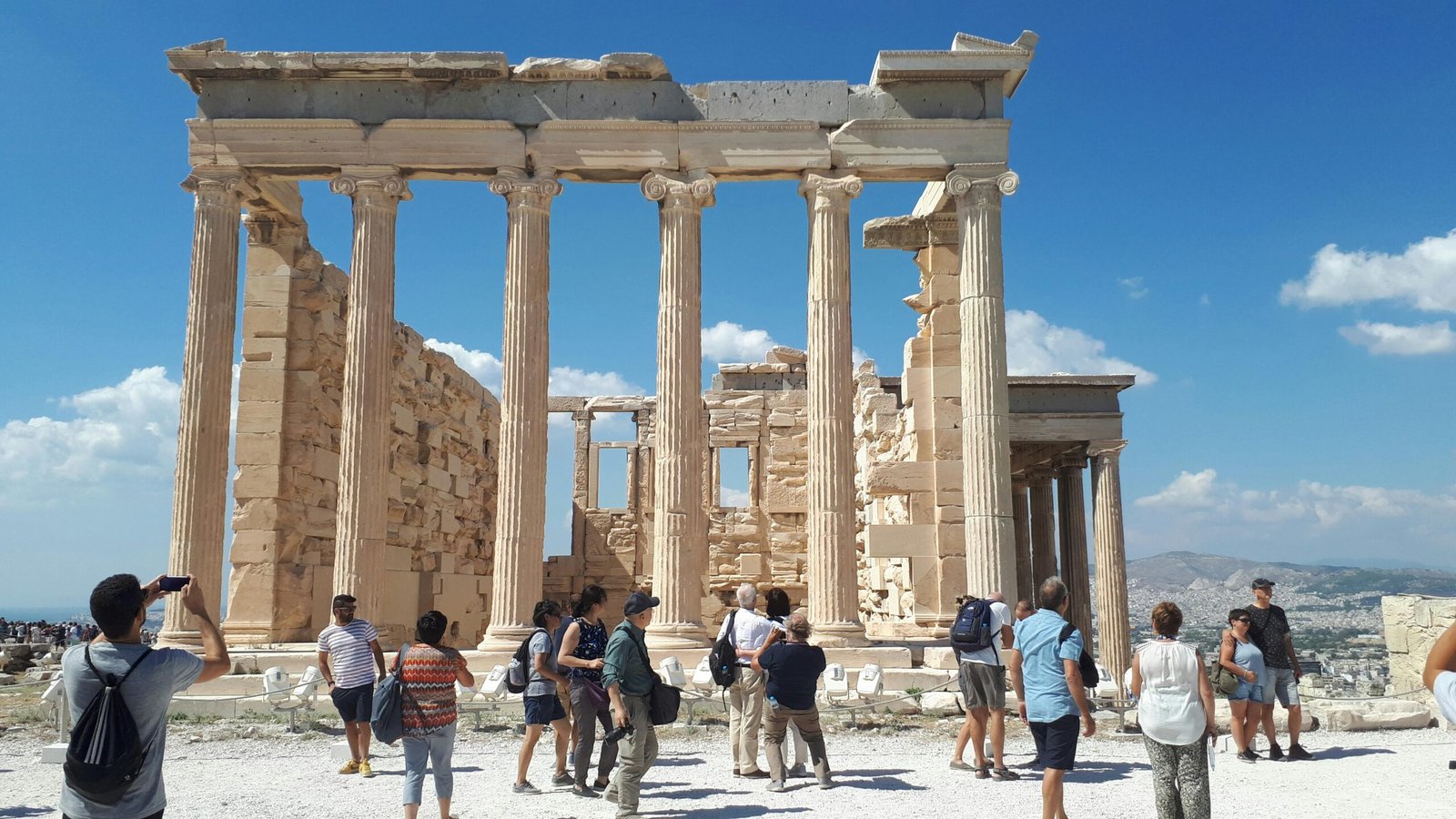
Athens Before the Islands: Why the City Changes the Whole Trip is not a slogan; it is a planning reality. Put Athens in the wrong place and the trip starts flat, rushed, and oddly expensive in the wrong ways. Put it in the right place and the entire journey feels more coherent, more grounded, and less like a string of disconnected hotel stays.
The mistake I see most often is treating Athens as a box to tick before the “real” Greece begins. That approach usually leaves travelers underprepared for the city, then overconfident about island timing and energy. Athens is not filler. It changes the pace, the budget, and the way people experience the rest of the country.


Athens Before the Islands: Why the City Changes the Whole Trip
Why Athens should not be treated as a throwaway stop
My position is simple: Athens should be planned as a core part of the trip, not as a necessary inconvenience. If you use it well, it gives context to the islands, prevents the trip from feeling too polished and repetitive, and gives travelers a real sense of place before they move into resort mode. If you use it badly, it becomes the part everyone complains about because they arrived tired, stayed in the wrong area, and expected the city to behave like an island town.
Athens Before the Islands: Why the City Changes the Whole Trip because it resets expectations. The islands are often about rhythm and scenery; Athens is about density, history, neighborhoods, and a more urban pace. Travelers who skip that contrast often end up comparing everything to a beach hotel and then wondering why the country feels more complicated than the photos suggested.
What travelers consistently get wrong
The first mistake is assuming Athens is only for museum people or first-time visitors. That is lazy planning. Even travelers who care more about food, architecture, or local neighborhoods than ancient sites usually get more out of Athens than they expect, because the city gives them a better entry point into modern Greece.
The second mistake is staying in the wrong part of the city for the kind of trip they want. Syntagma, Monastiraki, Plaka, Koukaki, Kolonaki, and Psyrri all serve different purposes, and they are not interchangeable. A traveler who wants calm evenings and better restaurants will be annoyed in one area and very happy in another. A traveler who wants a lively, central base may find a quieter neighborhood too thin and too residential.
Another common error is underestimating how much a city stay changes the rest of the itinerary. When Athens is rushed or awkwardly placed, island departures feel more stressful because the trip never gets a proper opening. Athens Before the Islands: Why the City Changes the Whole Trip is really about avoiding that dead-start feeling that makes the first two days feel like recovery instead of travel.
Neighborhoods that actually shape the experience
Plaka is the obvious name, but it is not the best answer for everyone. It works for travelers who want easy access to major sights and do not mind a more tourist-heavy atmosphere. Koukaki is often a smarter choice for people who want a more livable base without giving up proximity to the center.
Monastiraki is practical in the broadest sense, but it is also noisy and uneven. Some travelers love the energy; others find it tiring very quickly. Kolonaki has a more polished feel and suits visitors who prefer better dining and a less chaotic street scene. Psyrri is useful for travelers who want nightlife and do not mind a rougher edge. Syntagma is functional, but functional is not the same as pleasant.
If you want to understand the city before the islands, spend time where the city actually lives, not just where the postcard landmarks sit. The Acropolis Museum is worth including because it gives structure to the ancient material without forcing you to treat the city as a checklist. For current cultural programming and national context, the Hellenic Ministry of Culture is a better reference point than random travel summaries that flatten everything into the same few attractions.
Athens Before the Islands: Why the City Changes the Whole Trip in practical terms
What people underestimate is how Athens changes the emotional temperature of the trip. Arriving there first gives travelers a useful transition from home life into Greece. They get acclimated to the language, the pace, the food, and the fact that this is a real capital city, not a resort corridor. That matters more than many travelers want to admit.
The counterintuitive part is this: Athens can make the islands feel better, not worse. When travelers see the city first, the islands stop carrying the full burden of being “the dream part” of the trip. That usually leads to better satisfaction overall, because the islands are then appreciated for what they are rather than judged against an inflated expectation.
This is also where sequencing mistakes become expensive in a practical sense. If Athens is left to the end without enough thought, travelers often arrive back from the islands mentally done, then try to force one more city experience into a trip that no longer has room for it. The result is a flat final stretch and a weaker memory of the whole journey.
Who this suits
Athens before the islands suits first-time visitors who want context, food-focused travelers, history-minded travelers, and couples who prefer a trip with some depth instead of nonstop beach time. It also suits travelers who dislike the feeling of being rushed from airport to port to hotel with no sense of arrival. If you want the country to make sense as a whole, Athens helps.
It does not suit travelers who want every night to feel like a resort escape, or people who are already exhausted by cities and want to go straight to quiet shoreline life. It also does not suit travelers who plan badly and expect Athens to compensate for too many islands in too little time. Athens will not fix an overloaded itinerary. It will expose it.
- Best for: first-time visitors, culture-led trips, food travelers, and anyone who wants a stronger start to the journey.
- Not ideal for: travelers chasing only beach time, people who dislike urban noise, and anyone trying to cram too much into one trip.
What you gain and what you give up
You gain context, a better sense of Greek daily life, and a trip that feels more complete. You also gain a buffer against the common island mistake of arriving with unrealistic expectations. Athens gives the trip shape. It prevents everything from blending into one generic “Greek islands” memory.
What you give up is simplicity. A city stay asks for better planning, more realistic energy management, and a willingness to accept that not every part of Greece is soft-edged and easy. That trade-off is worth it for most serious travelers, but it is still a trade-off. Athens is not the easy choice. It is the better one for people who want the trip to mean something beyond the beach.
Where expert planning matters most
This is where a lot of travelers get burned: they assume any Athens stay will work as long as they sleep there one night. That is not how it works. The neighborhood, the length of the stay, and the role Athens plays in the sequence all change the result. Athens Before the Islands: Why the City Changes the Whole Trip is exactly the kind of decision that separates a smooth itinerary from one that feels improvised.
If you want a broader sense of what the city can offer beyond the standard highlights, the Acropolis Museum is one of the few institutions that consistently helps travelers understand why Athens deserves more than a token visit. It is a practical anchor, not a box to tick. That is the difference between a city that supports the trip and one that merely fills space.
Greece rewards travelers who arrive with a plan built around how they actually travel — not a generic template. The difference between a frustrating trip and a remarkable one often comes down to sequence, timing, and knowing which trade-offs matter for your situation.
Recommended experiences
Some experiences mentioned here are curated and managed by Elite Greece Travels.
- Athens Milos Itinerary — Itinerary (managed by Elite Greece Travels).
- Athens Milos Santorini Itinerary 9 Days — Itinerary (managed by Elite Greece Travels).
- Greece 7 Day Itinerary Athens Delphi Meteora Santorini — Itinerary (managed by Elite Greece Travels).
Frequently asked questions
Is Athens worth including before the islands?
Yes, for most travelers. It gives the trip context, breaks up the rhythm in a useful way, and prevents the islands from carrying the whole experience.
What is the biggest mistake people make with Athens?
Treating it like a one-night obligation and staying in a poor location for their travel style. That is how the city starts to feel chaotic instead of useful.
Which neighborhoods work best for a first Athens stay?
Koukaki, Kolonaki, Plaka, Monastiraki, Psyrri, and Syntagma all serve different needs. The right one depends on whether you value calm, access, nightlife, or a more polished atmosphere.
Does Athens make the trip too city-heavy before the islands?
Not if the itinerary is balanced. For many travelers, the city acts as a reset and makes the islands feel more rewarding rather than less.
Who should skip Athens before the islands?
Travelers who want only resort-style downtime, people who strongly dislike urban environments, and anyone already overpacking the itinerary with too many stops.
What is the most counterintuitive benefit of Athens first?
It often improves how travelers experience the islands because it lowers the pressure on the island portion to be the entire emotional center of the trip.