

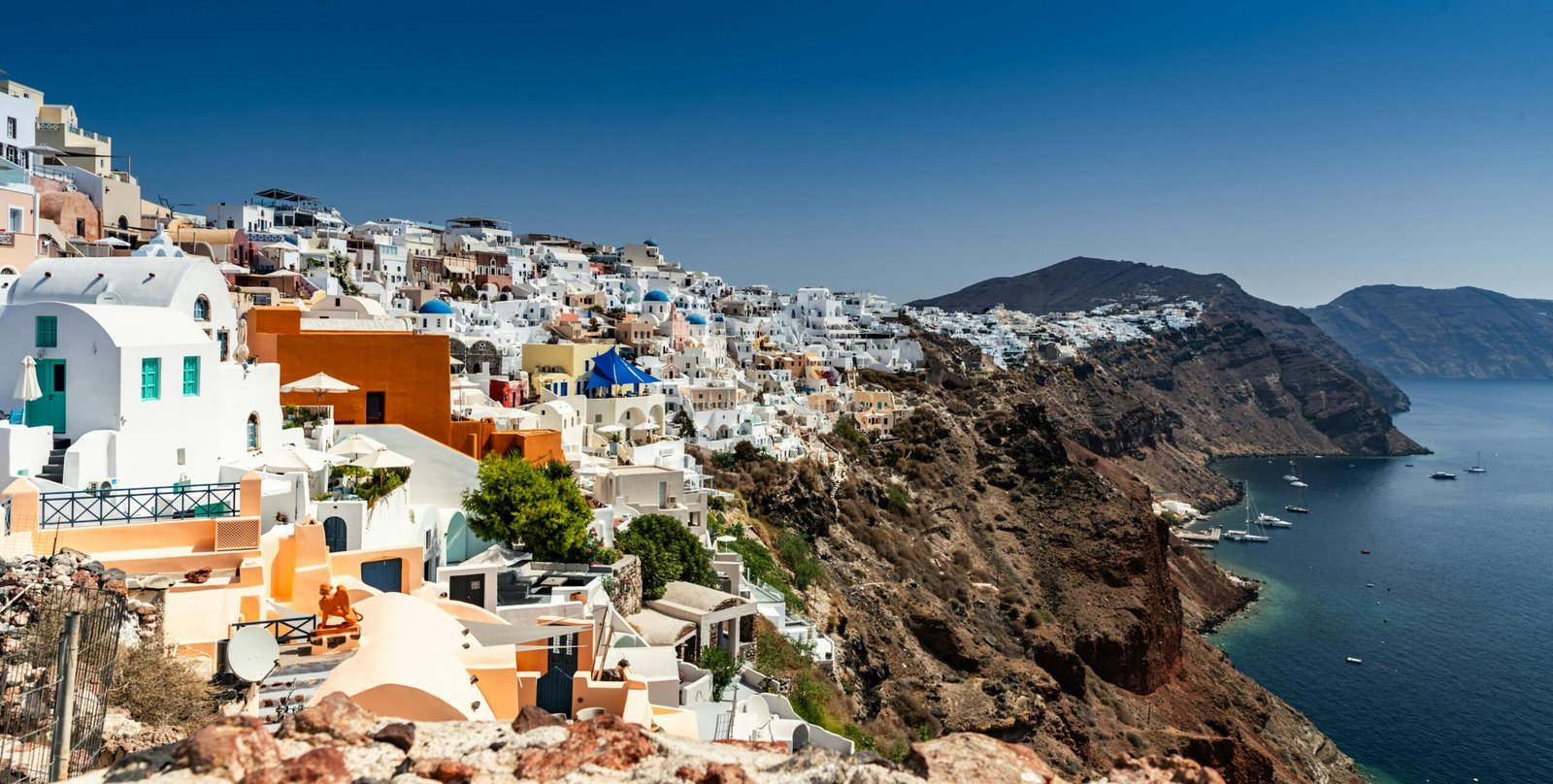
Why Most First-Timers to Santorini Leave Slightly Disappointed usually comes down to one thing: people arrive expecting a clean match between the island they have seen online and the island that exists in peak season. That mismatch is not a small detail. It shapes everything from where they stay to how they feel the moment they step into the crowds.
The pattern is predictable. Travelers want a first Santorini trip to feel effortless, iconic, and worth the money, so they build the whole decision around the image rather than the experience. By the time the practical reality shows up, the emotional budget is already spent.
Why Most First-Timers to Santorini Leave Slightly Disappointed
The real mistake: buying the image before understanding the place
Why Most First-Timers to Santorini Leave Slightly Disappointed is not a mystery to anyone who has watched the island absorb peak-season pressure year after year. The mistake starts long before arrival. People do not choose Santorini because they know what kind of trip it is; they choose it because they have already decided what it should make them feel.
That is a dangerous way to plan Greece. Santorini is not a neutral destination that politely adapts to your expectations. It is one of the most heavily interpreted places in the country, and the interpretation usually arrives first, while the actual experience arrives second.
Travelers are not being foolish. They are responding to a very common psychological pull: the desire to make a major trip feel instantly validated. Santorini looks like a place where the money, the time off, and the anticipation will all be visibly rewarded. That is exactly why disappointment lands so hard when the island feels busy, expensive, and more managed than personal.
Why the emotional setup is so strong
People are not just booking a destination. They are booking a feeling of arrival, proof, and reward. Santorini has been sold for years as the Greek island that confirms you made the right choice, which makes it especially vulnerable to emotional overinvestment.
That is why first-timers often arrive already looking for the moment that justifies everything. They want the view, the meal, the room, the sunset, the quiet. When those moments are interrupted by crowds, queues, noise, or the ordinary friction of a very popular island, the reaction is often sharper than the situation itself deserves.
Why Most First-Timers to Santorini Leave Slightly Disappointed is often a story about expectation inflation, not bad taste. The traveler has built the island up as a rare experience, so anything less than seamless feels like a loss. That emotional math is the real problem.
The gap between what people expect and what they actually feel
Most first-timers expect Santorini to feel exclusive in a calm, controlled way. They imagine a place where every view is private, every meal feels special, and every moment justifies the premium. What they often get instead is a highly compressed destination where many people are trying to extract the same experience at the same time.
The surprise is not that Santorini is busy. The surprise is how quickly that busyness changes the emotional tone of the trip. A traveler can be standing in one of the most recognizable places in Greece and still feel oddly processed, because the island’s fame creates a constant sense that they are sharing the moment with everyone else.
This is the counterintuitive part most blogs miss: the disappointment is often strongest among travelers who are most excited, not those who are skeptical. The more a person arrives hoping for a once-in-a-lifetime emotional high, the more likely they are to notice every interruption. Why Most First-Timers to Santorini Leave Slightly Disappointed is, in practice, a story about the gap between anticipation and atmosphere.
The moment the disappointment usually hits
It usually hits when travelers realize Santorini is not giving them privacy by default. That moment can come at a viewpoint, at a restaurant, in a hotel common area, or anywhere the island’s popularity becomes physically obvious. The issue is rarely one dramatic failure. It is the accumulation of small frictions that make the experience feel less effortless than expected.
At that point, the traveler is no longer comparing Santorini with another island. They are comparing it with the mental version they brought with them. That comparison is almost always unfair to the real place, which is why the emotional drop feels so abrupt.
Once that happens, people start revising the whole trip in their heads. They begin asking whether they chose the wrong island, the wrong season, or the wrong level of ambition for the budget. That is the planning consequence of the wrong assumption: the disappointment does not stay abstract. It changes how every remaining decision feels.
Who is most prone to this pattern
First-time visitors who are celebrating a milestone are especially vulnerable. Honeymooners, anniversary travelers, and people taking a long-awaited luxury trip often arrive with a strong need for the destination to feel meaningful on command. Santorini is marketed directly into that emotional space, which is why it can disappoint so efficiently.
It also catches travelers who are used to equating popularity with quality. They assume that because a place is famous, it must deliver a universally satisfying experience. That assumption works better in cities than on islands, where crowd pressure, seasonality, and accommodation style can change the whole mood of the trip.
Budget-conscious travelers can be disappointed too, but for a different reason. They often spend more than they intended because they assume Santorini is a once-in-a-lifetime destination worth stretching for. Then they discover that the premium is not always buying comfort in the way they expected.
Why peak season makes the emotional problem worse
Peak season does not just add people. It changes the psychological contract of the island. Travelers who arrive in the busiest months are not simply seeing Santorini at its fullest; they are seeing it at its most competitive, where every shared viewpoint, table, and photo opportunity feels slightly contested.
That matters because many first-timers are already carrying a fragile expectation of ease. They want the trip to feel controlled, polished, and worth the expense. Peak season makes those expectations harder to satisfy, and the island’s reputation can make that friction feel like a personal failure rather than a predictable condition.
If you want a broader sense of how Greece’s most visited places are framed for travelers,
Visit Greece is useful as a starting point. But the real planning work is understanding what the marketing leaves out: density, timing pressure, and the fact that famous places often feel less spacious than people imagine.
What a better approach looks like
The right way to approach Santorini is not to lower your standards. It is to stop asking the island to perform the exact fantasy you built around it. That shift sounds small, but it changes the whole trip. You stop treating every crowded moment as a failure and start evaluating whether the island matches the kind of experience you actually want.
Be honest about what you are really seeking. If you want serenity, room to breathe, and a feeling of discovery, Santorini may not be the cleanest fit for a first Greece trip in the busiest months. If you want a famous island with dramatic scenery and you can tolerate the trade-offs, then go in knowing what you are paying for.
Greece rewards travelers who arrive with a plan, but Santorini especially rewards travelers who arrive with a realistic emotional framework. That means understanding that a famous place is not the same thing as a personally satisfying place. The difference is where most disappointment begins.
For travelers who want to understand the cultural context of Greece beyond the postcard version, the Hellenic Ministry of Culture is a better reference point than social media. It will not solve the crowd problem, but it does remind you that Greece is not a single experience packaged for convenience.
Conclusion
Why Most First-Timers to Santorini Leave Slightly Disappointed is not about Santorini failing to be beautiful enough. It is about travelers expecting a famous island to behave like a private reward, especially in peak season, when the reality is busier, more expensive, and less controlled than the image suggests. If you understand that before you go, you are far less likely to mistake normal friction for a failed trip.
Greece doesn’t punish inexperience. It punishes unexamined assumptions. The travelers who leave disappointed rarely lacked information — they lacked a framework for using it.
Frequently asked questions
Why do first-time visitors to Santorini often feel disappointed?
Because they expect the island to match the polished image they have seen online. In peak season, Santorini is busier, more expensive, and less private than many first-timers anticipate, so the emotional gap shows up quickly.
Is Santorini overrated for first-time travelers?
Not inherently. It is overrated for travelers who want solitude, ease, or a relaxed island rhythm. For visitors who understand the trade-offs, it can still be a strong choice.
What is the biggest mistake people make when planning Santorini?
They plan around the image instead of the actual conditions. That usually means underestimating crowd pressure, overestimating privacy, and assuming the island will feel more effortless than it does in high season.
Which travelers are most likely to be disappointed?
Honeymooners, milestone travelers, and people making a once-in-a-lifetime splurge are the most vulnerable. They often arrive expecting Santorini to deliver instant emotional payoff.
Does visiting Santorini in peak season make a big difference?
Yes. Peak season intensifies the very things that cause disappointment: crowds, competition for space, and a sense that the island is being experienced by everyone at once.
How can I avoid leaving Santorini disappointed?
Go in with a realistic framework. Decide whether you want a famous, high-demand island experience or a quieter Greek island trip, and choose accordingly before the emotional expectations harden.