

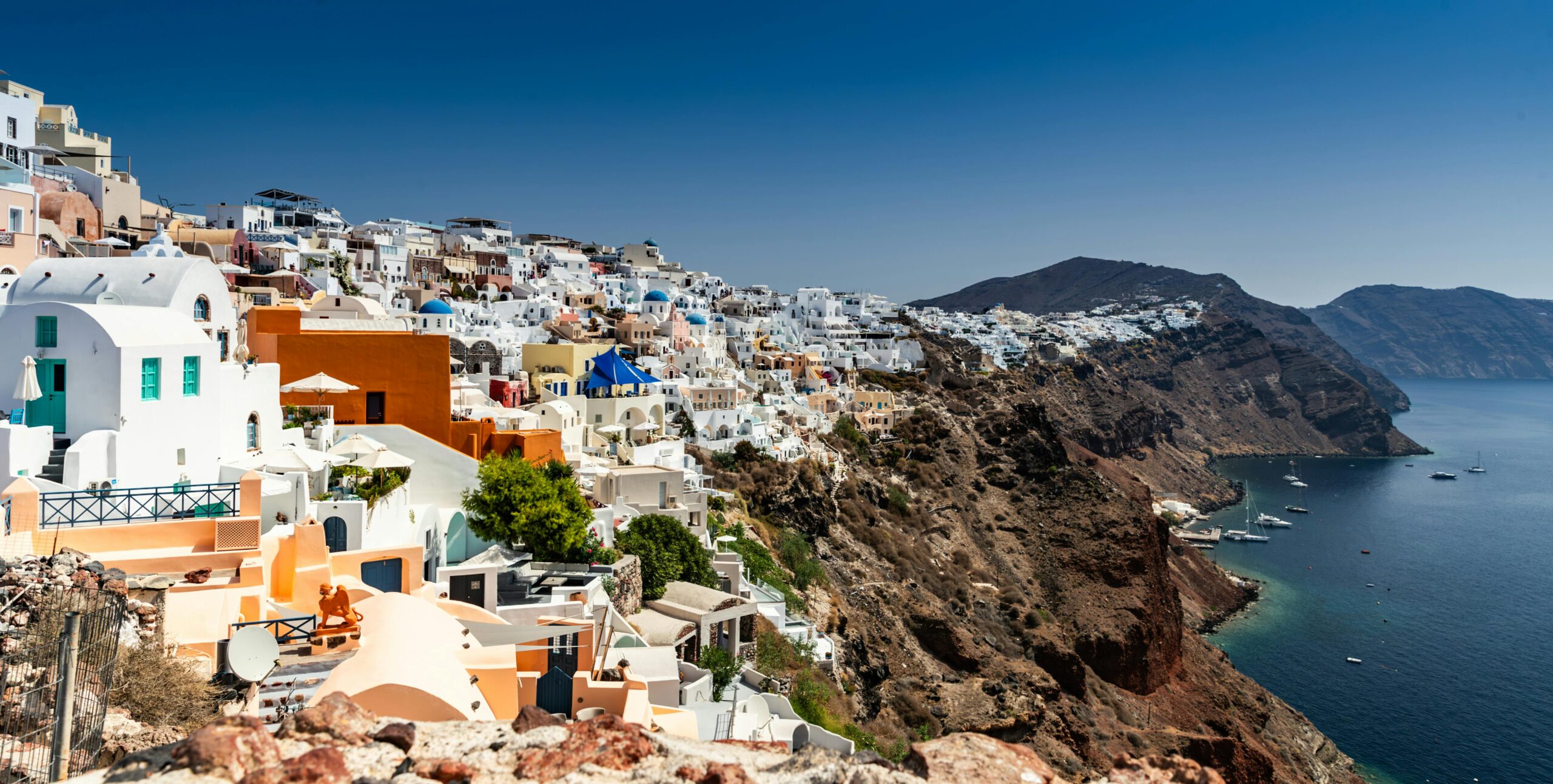
Why Santorini in Peak Season Is the Wrong Dream for Many Travelers because the island’s famous view comes with heavy crowds, inflated prices, and a pace that turns simple plans into work. If you want romance to feel effortless, peak season is often the wrong time to choose Santorini.
The island is still worth visiting for the right traveler, but the gap between expectation and reality is wide in July and August. This is not a place where you casually drift through the day and everything falls into place.
Why Santorini in Peak Season Is the Wrong Dream for Many Travelers
Why Santorini in Peak Season Is the Wrong Dream for Many Travelers is not a contrarian slogan. It is the practical truth that catches a lot of first-timers off guard. The island can still be excellent, but peak season exposes every weakness: crowd pressure, limited availability, and a level of friction that many travelers simply did not budget for.
Most travelers assume Santorini is a place where the view does the work. In peak season, the view is only part of the story. The actual experience is shaped by lines, timing, heat, sold-out tables, and the constant sense that everyone else had the same idea at the same time. That is why Why Santorini in Peak Season Is the Wrong Dream for Many Travelers keeps coming up in planning conversations among people who have been here before.
Why Santorini in Peak Season Is the Wrong Dream for Many Travelers
The core problem is simple: Santorini is small, famous, and heavily concentrated into a few high-demand areas. In July and August, that combination becomes punishing for travelers who want ease. The island does not scale well when everyone arrives at once, and the most photographed places absorb the pressure first.
Most travelers assume peak season means more energy and a better atmosphere. In Santorini, peak season often means more waiting, more noise, and less control over your day. If your idea of a good trip is moving comfortably, choosing your own pace, and not having to compete for every table and photo spot, this is the wrong dream.
The real issue is not just crowds. It is the cumulative effect of friction. A delayed dinner, a packed viewpoint, a rushed check-in, a long wait for a basic meal, and a sunset area that feels managed rather than spontaneous can drain the experience fast. That is why Why Santorini in Peak Season Is the Wrong Dream for Many Travelers is a fair warning, not an exaggeration.
When Santorini Works, and When It Does Not
Santorini works best for travelers who value the island as a destination in itself, not as a backdrop for a relaxed beach holiday. If you are coming for a special occasion, can spend more to reduce stress, and are comfortable with a tightly managed travel style, it can still deliver. The key is accepting that the island is curated, busy, and expensive during peak months.
It does not work well for travelers who want quiet romance, easy movement, or a spontaneous feel. It also disappoints families with young children, travelers who dislike crowds, and anyone expecting a classic Greek island rhythm. Those travelers usually leave saying the island was beautiful but tiring, which is a common and predictable outcome.
One counterintuitive point: the famous sunset is not the main problem. The real problem is the buildup around it. By late afternoon, the island’s pressure points are already visible, and many travelers spend the best light of the day dealing with logistics instead of enjoying themselves. That is the part social media rarely shows.
If you want a broader sense of how Greece handles peak travel pressure,
Visit Greece is useful for understanding the national seasonality pattern, but Santorini is one of the clearest examples of where demand outpaces comfort.
Trade-Off Matrix: Who Should Go, Who Should Skip
Here is the honest breakdown travelers usually need before they book:
- Couples on a special trip: Go only if you are willing to pay for premium positioning and accept crowds as part of the package.
- First-time Greece visitors: Go if Santorini is a priority, but do not make it your only island if you want a fuller impression of Greece.
- Families: Usually a poor fit in peak season because movement is harder, downtime is less restful, and costs rise fast.
- Luxury travelers: More manageable, because higher-end stays and services can reduce friction, but the island is still busy.
- Travelers seeking calm: Skip peak season. Santorini is not built for low-effort peace in July and August.
Season matters more here than many travelers realize. May, early June, late September, and October can feel like a different island from the peak summer version. The island still has demand, but the pressure drops enough that the same places feel more usable and less performative.
Most travelers assume the island’s beauty is constant and the experience is the same year-round. Actually, the experience changes dramatically with season, and peak season is where the mismatch is most obvious. That is why Why Santorini in Peak Season Is the Wrong Dream for Many Travelers is really a timing problem as much as a destination problem.
The Costs Travelers Underestimate
Price is only the obvious cost. The deeper cost is time lost to inefficiency. When restaurants are full, viewpoints are crowded, and service is stretched, you spend more of your day managing the island than enjoying it.
Another thing travelers underestimate is how quickly the island can feel repetitive at peak capacity. If you are not staying in the right area or you are trying to squeeze too much into a short stay, the famous white-and-blue image can start to feel narrow. That is not a failure of the island; it is a failure of expectation.
For travelers interested in Greek cultural context beyond the postcard version, the Hellenic Ministry of Culture is a better reference point than generic travel content. Santorini sits inside a much larger Greek travel story, and understanding that helps travelers make smarter choices about when and why to go.
What Most Travelers Get Wrong About Santorini
Most travelers assume Santorini is a romantic island first and a logistical challenge second. In peak season, that order flips. Romance still exists, but it is often scheduled, purchased, and protected rather than effortless.
That is the part many people resent. They expected a place that would carry the mood for them. Instead, they find themselves planning around crowds, paying for convenience, and making compromises that feel out of step with the fantasy they booked.
This is why I take a clear position: if your main goal is relaxed island time, Santorini in peak season is the wrong choice. Pick a different Greek island or visit Santorini outside the crush. Trying to force a calm experience into the busiest months is how travelers end up disappointed.
Clear Guidance for Common Traveler Scenarios
If you are a couple planning a once-in-a-lifetime trip, Santorini can still be the right call, but only if you treat it as a high-demand destination and not a casual stop. If you are flexible on dates, choose shoulder season and you will get a more usable version of the island.
If you are a first-time visitor to Greece, do not let Santorini dominate the entire trip. Many travelers make the mistake of equating Greece with Santorini alone, then wonder why the country feels smaller and more expensive than expected. That is a planning error, not a Greece problem.
If you want easy movement, quieter meals, and a more natural pace, peak season Santorini is not for you. If you want the famous view and are willing to accept the trade-offs, then go in with open eyes and a realistic budget. That is the difference between a trip that feels controlled and one that feels frustrating.
Why Santorini in Peak Season Is the Wrong Dream for Many Travelers comes down to this: the island is famous for a reason, but fame creates pressure, and pressure changes the experience. Choose it for the right reasons, at the right time, and with the right expectations.
Greece has a way of rewarding travelers who ask the right questions before they arrive. The travelers who leave disappointed usually asked the wrong ones — or didn’t ask at all.
Recommended experiences
Some experiences mentioned here are curated and managed by Elite Greece Travels.
- Athens Milos Santorini Itinerary 9 Days — Itinerary (managed by Elite Greece Travels).
- Greece 7 Day Itinerary Athens Delphi Meteora Santorini — Itinerary (managed by Elite Greece Travels).
- Santorini Sunset Cruise With Dinner In The Caldera — Cruise (managed by Elite Greece Travels).
Frequently asked questions
Is Santorini worth visiting in peak season?
Yes, for travelers who want the famous view and are prepared for crowds, higher prices, and a more managed experience. No, for travelers expecting an easy, relaxed island rhythm.
Why does Santorini feel so crowded in July and August?
Because the island is small, highly concentrated, and one of Greece’s most in-demand destinations. The same viewpoints, restaurants, and sunset areas absorb too much traffic at once.
What type of traveler is most disappointed by Santorini in peak season?
Travelers who want quiet romance, slow days, or spontaneous movement usually feel the mismatch most strongly. Families with young children also tend to struggle more with the pace and friction.
Is Santorini better in shoulder season?
Yes. Late spring and early autumn usually reduce crowd pressure enough to make the island feel more functional and less stressful.
Does a luxury stay solve the peak season problem?
It reduces friction, but it does not remove the crowd effect. A better hotel can improve comfort, yet the island itself is still busy and expensive.
Should Santorini be your only Greek island?
Usually not. If you want a fuller Greece trip, Santorini works better as one part of a broader itinerary rather than the entire focus.