


Why Planning Athens, the Islands, and Meteora Yourself Is Harder Than It Looks is the question most travelers ask only after they have already overcommitted to too many places. The trip sounds neat on paper: a capital, a few islands, one mainland highlight, done. In practice, you are mixing three very different travel rhythms, and that is where good trips get diluted.
The real issue is not distance alone. It is sequencing, timing, and where you sleep in each place. Get those wrong and you spend a lot of money to feel rushed, fragmented, and oddly detached from the places you came to see.

Why Planning Athens, the Islands, and Meteora Yourself Is Harder Than It Looks
My position is simple: this is not a casual DIY trip unless you are unusually disciplined about pace and very selective about what you include. Athens, the islands, and Meteora each demand a different kind of attention, and most travelers try to treat them as interchangeable stops. That is the fastest way to turn a premium Greece trip into a logistics exercise.
Why Planning Athens, the Islands, and Meteora Yourself Is Harder Than It Looks
The phrase sounds dramatic until you see what actually goes wrong. Travelers cram Athens, Santorini or Paros, and Meteora into one itinerary and then act surprised when the trip feels thin. The problem is not that Greece is difficult; the problem is that each part of this trip has its own pace, and those paces do not naturally fit together.
Athens needs smart neighborhood choices such as Plaka, Koukaki, Syntagma, and Kolonaki because location changes the whole experience. Meteora is not a casual sightseeing add-on; Kalambaka and Kastraki are different bases with different trade-offs, and people who ignore that usually underestimate how tiring the mainland portion feels. On the islands, the difference between a polished stay in Naoussa, a quieter base in Firostefani, or a more practical choice in Chora can make or break the trip.
The two mistakes travelers make most often
The first mistake is overpacking the itinerary with too many islands. One island in the Cyclades can be enough if you want quality; three islands plus Athens plus Meteora is where the trip starts to lose coherence. The second mistake is assuming all connections and overnights are equally forgiving, which they are not.
Here is the practical consequence: when travelers ignore pacing, they often end up paying for expensive stays they barely use. A late arrival, a short night, or a badly chosen base in Athens can wipe out the value of a high-end hotel before the trip has even settled.
What most people underestimate about Athens
Athens is not just a pre- or post-island stop. It is a real city with neighborhoods that behave differently, and that matters if you care about quality. Syntagma is efficient but can feel impersonal, Plaka is convenient but heavily trafficked, Koukaki works well for travelers who want a more lived-in feel, and Kolonaki suits people who want a more polished urban stay.
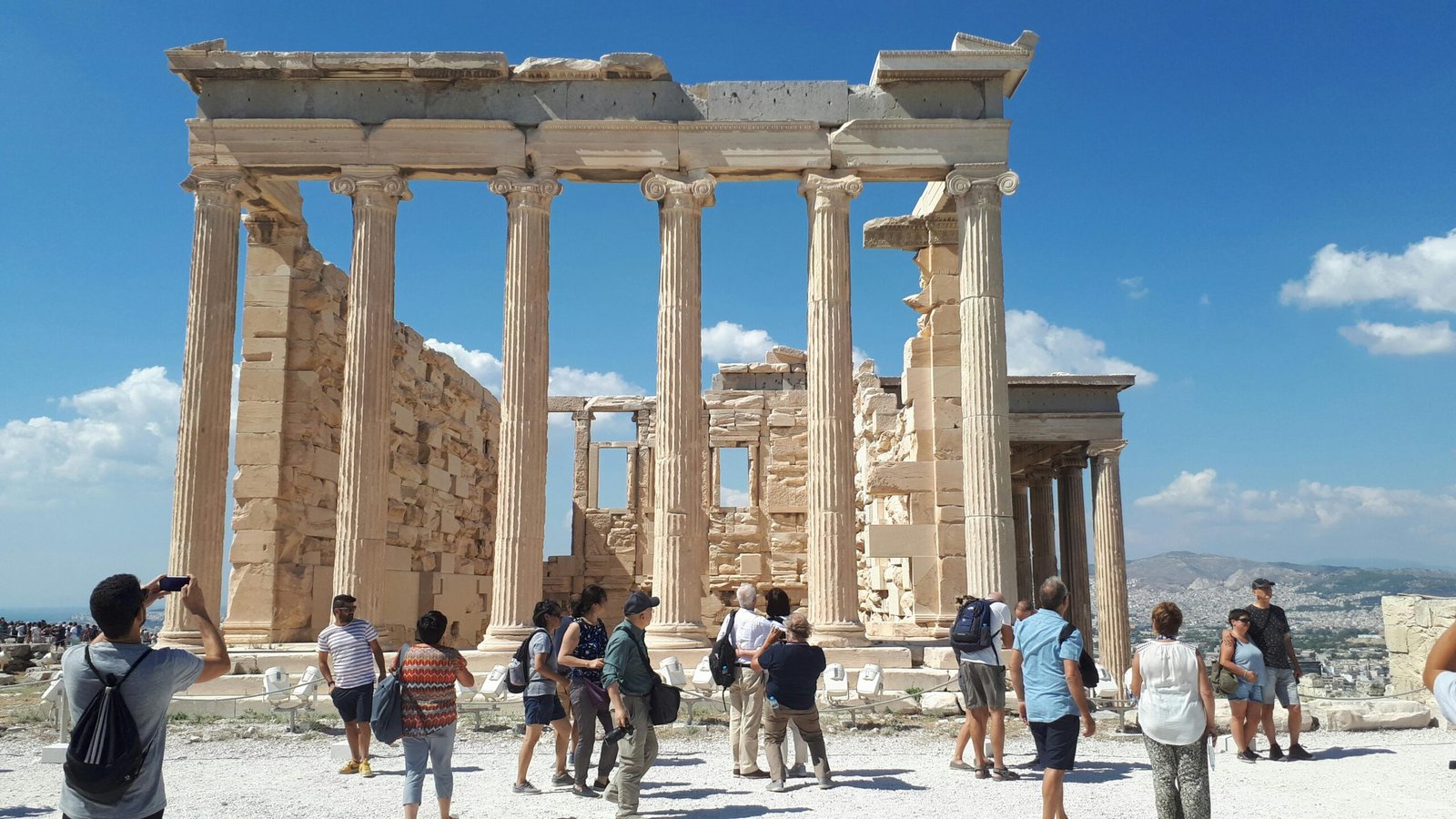
Travelers also underestimate how much the museum-and-ancient-site combination shapes the city experience. If you care about context, the Acropolis Museum is not optional filler; it changes how the rest of Athens reads. Skip the right museum time, and Athens becomes just another hot capital with ruins instead of a place with actual depth.
The islands are not a neutral add-on
This is where people make the most expensive planning errors. The islands are not one category; a stay in Paros feels very different from Santorini, and both are different again from Naxos or Mykonos. If you want calm, food, and a less compressed feel, Paros and Naxos usually make more sense than the more image-driven islands.
Counterintuitive but true: the most “efficient” island choice is often the one with the least famous reputation. Travelers who insist on the biggest-name island usually spend more, sleep less well, and get less variety in their day-to-day experience. The island that photographs best is not always the one that works best inside a multi-stop itinerary.
Meteora changes the trip more than people expect
Meteora is the section that gets treated as an easy cultural detour, and that is a mistake. It is visually dramatic, yes, but the real issue is that it changes the texture of the whole itinerary. After the islands, Meteora asks for a completely different mindset: quieter, more grounded, less indulgent, and more structured around the landscape and the monasteries.
For travelers who want a seamless luxury feel, that contrast can be either excellent or jarring. Kalambaka is practical, Kastraki is more atmospheric, and the wrong choice here can make the area feel more like a stopover than a meaningful part of the trip. If you want the trip to feel intentional, Meteora needs to be treated as a major chapter, not a box to tick.
Who this suits
This trip suits travelers who value variety but are willing to accept that variety has a cost. It works well for couples, design-conscious travelers, and repeat visitors to Greece who already know they do not want a beach-only holiday. It also suits people who care about culture, dining, and scenery in equal measure.
- Good fit: travelers who want a polished city-to-island-to-mainland combination.
- Good fit: couples and small groups who can keep the itinerary focused.
- Good fit: visitors who care more about quality than checking off names.
- Poor fit: first-timers who want to see everything in one go.
- Poor fit: families who need long, easy downtime in one base.
- Poor fit: travelers who dislike moving between very different trip styles.
What you gain, and what you give up
You gain range, contrast, and a real sense of Greece beyond the postcard version. Athens gives context, the islands give leisure and coastal rhythm, and Meteora gives a mainland counterweight that keeps the trip from becoming repetitive. Done well, this is a strong, memorable combination.
You give up simplicity, flexibility, and some margin for error. That is the honest trade-off. If you are trying to maximize rest, this is not the easiest structure. If you are trying to maximize the quality of what you see, it can be excellent — but only when the trip is trimmed to a realistic shape.
When expert help actually matters
This is the kind of trip where expert help is not about luxury for its own sake. It is about avoiding the mistakes that quietly ruin expensive travel: the wrong Athens neighborhood, the wrong island for your travel style, too many moving parts, or a mainland segment that gets treated as an afterthought. Greece rewards travelers who arrive with a plan, and this is one of the clearest examples.
If you want a useful starting point, the official Greek tourism site at
visitgreece.gr is fine for broad inspiration. For actual trip design, though, the issue is not inspiration. It is judgment, and judgment is what most self-planned versions of this trip lack.
Most Greece trips follow the same tired script. The ones that don’t — the ones travelers still talk about years later — were built around a real understanding of how this country works. That kind of understanding takes time, or it takes someone who already has it.
Frequently asked questions
Is it realistic to combine Athens, one island, and Meteora in one trip?
Yes, but only if you keep the itinerary tight and accept that each stop needs a different kind of planning. The mistake is adding extra islands or treating Meteora like a quick side note.
What is the most common planning mistake on this type of Greece trip?
Trying to do too much. Travelers usually underestimate how much pace changes between Athens, the islands, and Meteora, then they build an itinerary that looks efficient but feels rushed.
Which Athens neighborhoods work best for this kind of trip?
Plaka, Koukaki, Syntagma, and Kolonaki are the names that come up most often for good reasons. Each has a different feel, and choosing the wrong one can make your Athens stay less useful than it should be.
Are the islands always the highlight of the trip?
Not necessarily. For some travelers, Athens or Meteora ends up being more satisfying because the islands can feel crowded, expensive, or too compressed if the trip is poorly paced.
Why is Meteora harder to add than most people think?
Because it changes the rhythm of the trip. It is not a beach extension or a simple sightseeing stop; it needs a different mindset and a base that makes sense for the area.
Who should avoid planning this trip completely on their own?
Travelers who want a premium experience but do not want to spend time sorting out sequencing, base choices, and pacing should avoid a fully self-built version. That is where the trip most often loses quality.