

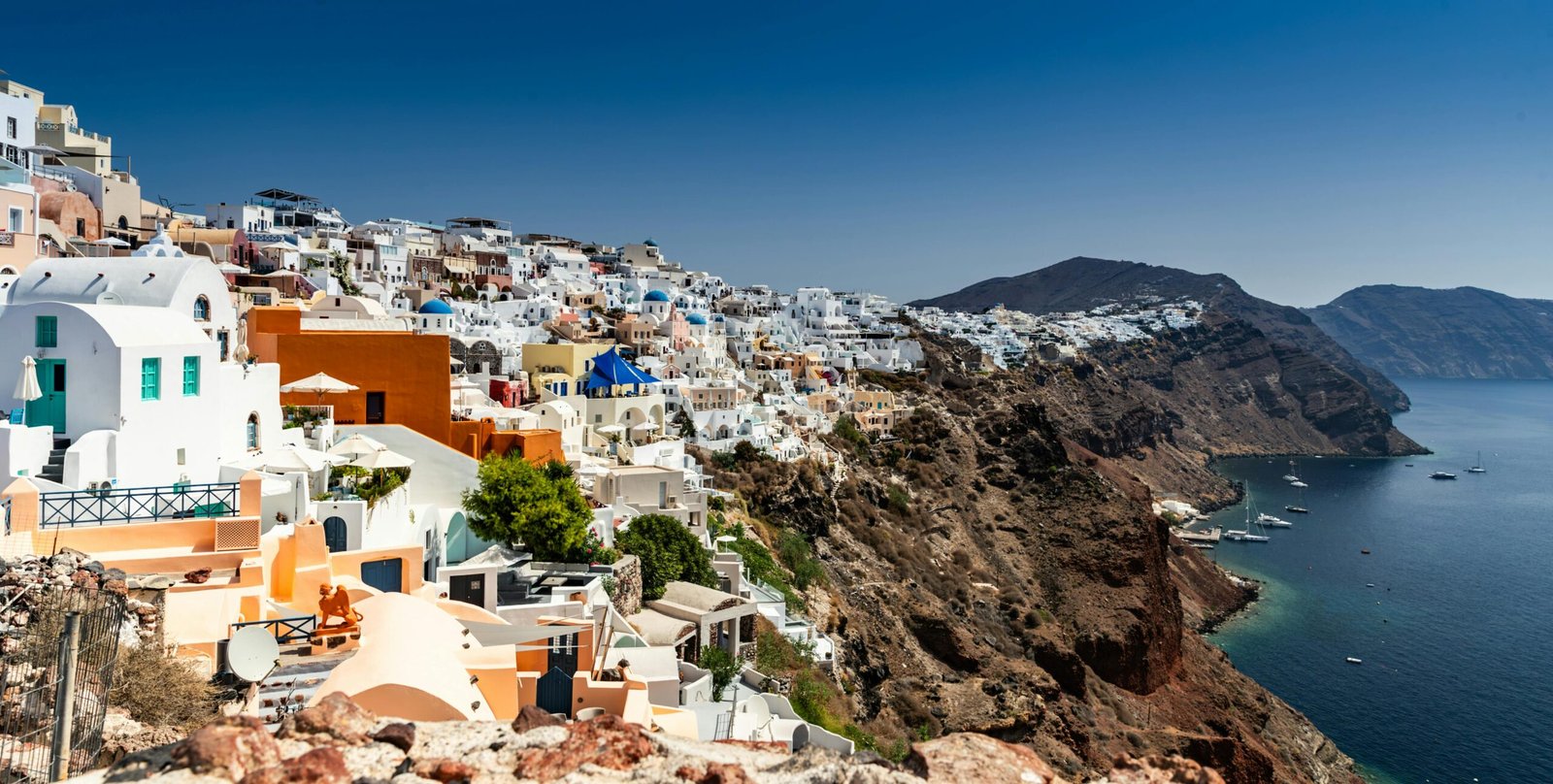
Why Most First-Timers to Santorini Leave Slightly Disappointed usually comes down to a simple psychological trap: people arrive expecting a place to behave like its photographs. They are not choosing Santorini for what it is on the ground; they are choosing it for the version they have already seen online, in ads, and in other people’s highlight reels.
That gap matters more in Santorini than in most Greek destinations because the island is small, expensive, and heavily compressed in peak season. The result is predictable: visitors spend a lot of money to feel they are finally inside the image, then discover that the image is not the same thing as the experience.
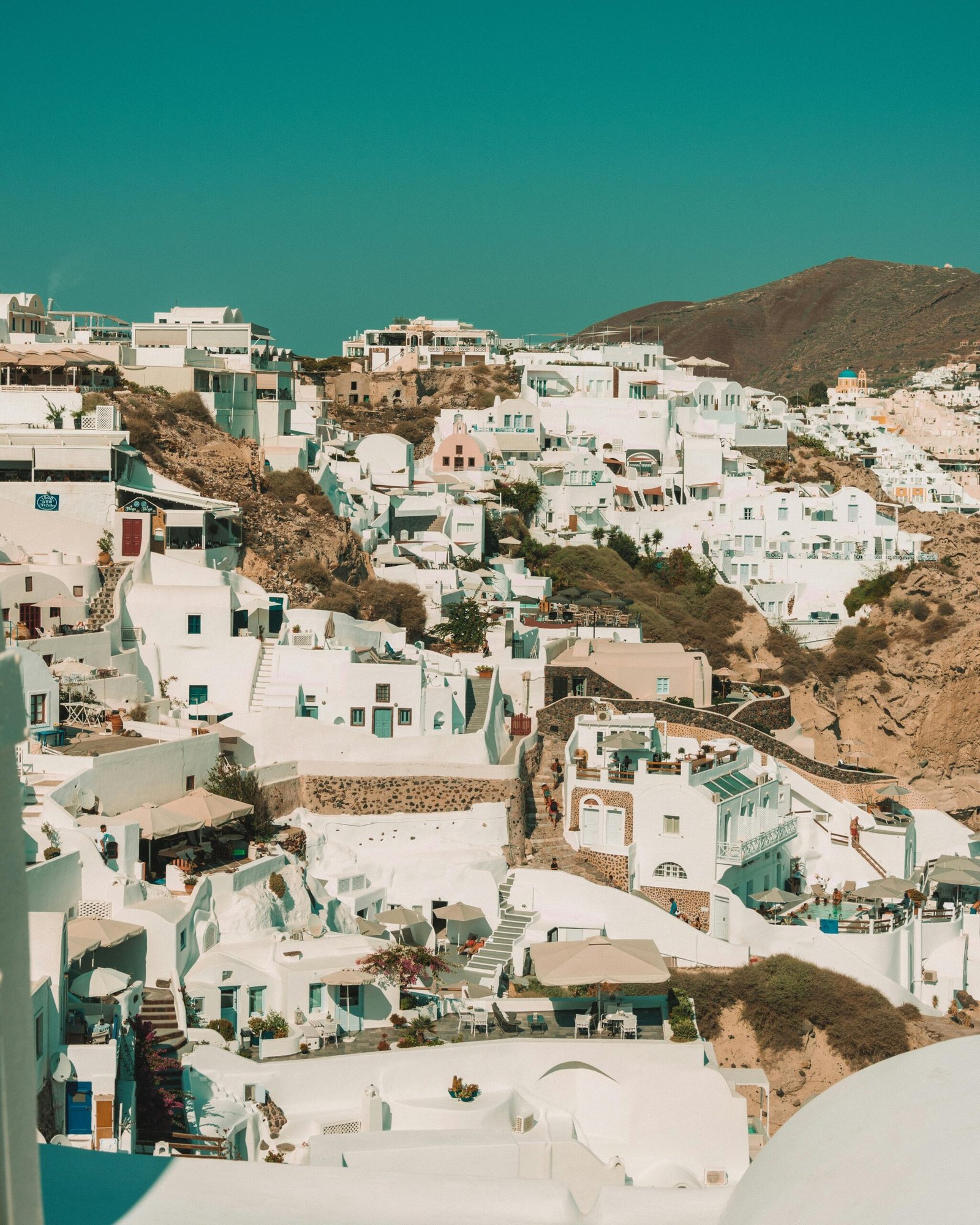
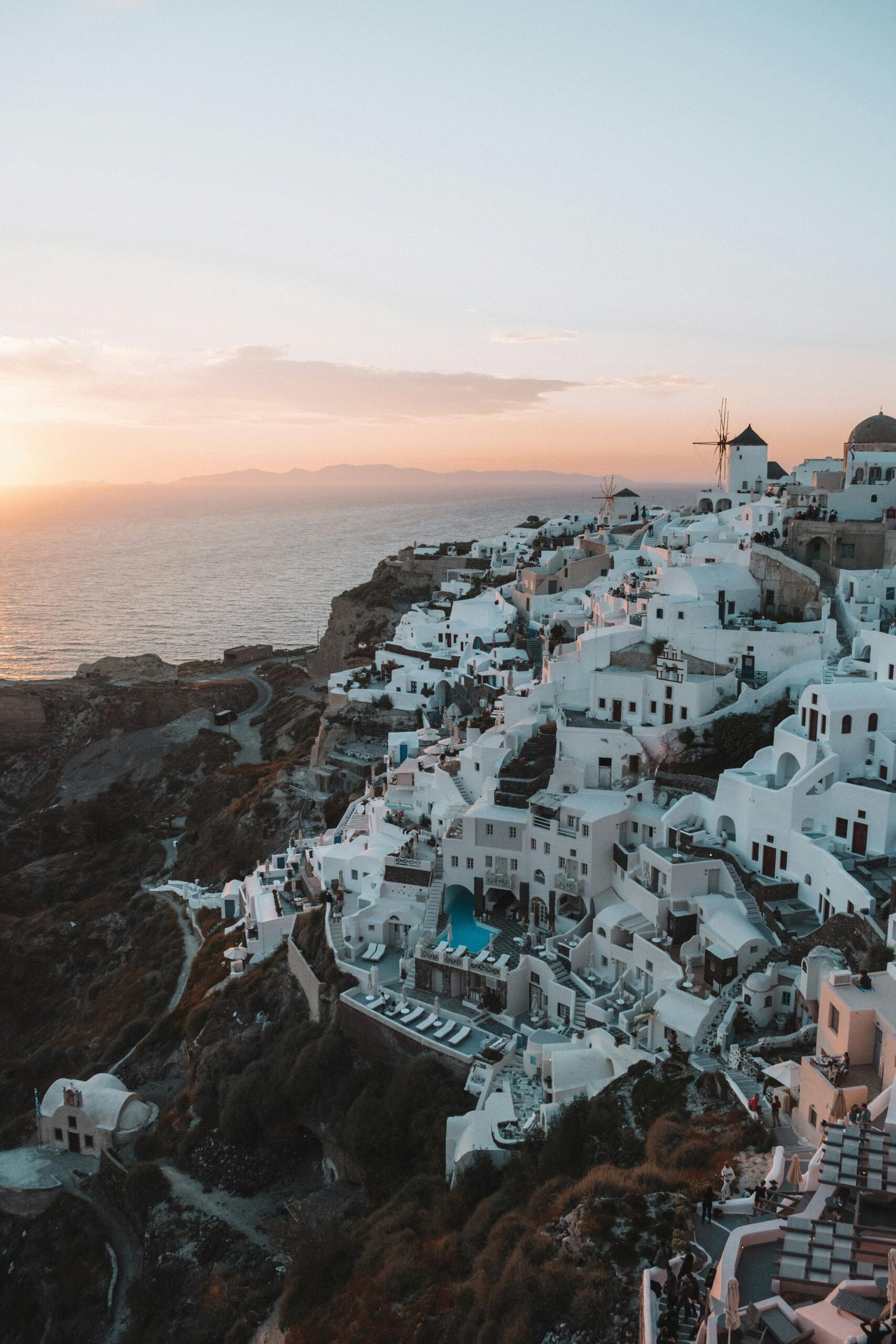
Why Most First-Timers to Santorini Leave Slightly Disappointed
The disappointment is rarely dramatic. It is usually a slow, uncomfortable realization that the island feels more managed, crowded, and expensive than the first-time visitor expected. The problem is not that Santorini is overrated in a simple sense; the problem is that many travelers arrive with the wrong emotional contract.
They think they are buying romance, calm, and certainty. What they actually get in peak season is a highly desirable place under pressure, where the best moments are real but often surrounded by queues, noise, and the sense that everyone else is trying to have the same trip at the same time.
The psychology behind Why Most First-Timers to Santorini Leave Slightly Disappointed
The core mistake is not ignorance. It is projection. Travelers project a private fantasy onto a very public island, then feel let down when the island refuses to perform that fantasy on demand.
Santorini has become shorthand for a mood: romance, luxury, whitewashed views, and effortless beauty. That shorthand is powerful because it lets people make a decision quickly, and quick decisions feel confident when you are planning a rare, expensive trip. The issue is that confidence is often built on repetition, not understanding.
People also confuse popularity with suitability. A destination can be famous, expensive, and heavily marketed without being the best fit for the kind of trip they actually want. Santorini is one of the clearest examples of this in Greece, and Why Most First-Timers to Santorini Leave Slightly Disappointed is usually a story about mismatch, not bad luck.
What travelers expect vs what they actually experience
Before they arrive, many first-timers imagine a place that feels spacious, intimate, and emotionally easy. They expect long, relaxed evenings, a sense of exclusivity, and the feeling that the island is somehow working for them. That is the fantasy sold by most imagery.
What they often meet in peak season is a destination with very limited breathing room. Popular viewpoints feel staged by crowd behavior, restaurants fill early, and the day can start to feel organized around avoiding friction rather than enjoying the island itself. That is the emotional gap: not disappointment with the scenery, but exhaustion from the social conditions around it.
One counterintuitive truth: many first-timers are not disappointed because Santorini is too busy. They are disappointed because it is busy in a way that still looks beautiful in photos. That combination creates a dangerous mental trap: the place seems like it should feel better than it does, so visitors blame themselves for not “getting it.”
The moment the disappointment usually hits
The letdown usually arrives in a very specific moment: the first time a traveler realizes they are sharing the exact experience they thought would feel private. It might be a viewpoint, a terrace, a meal, or a sunset spot. The details vary, but the emotional pattern is the same.
That is when the visitor understands that Santorini in peak season is not a personal encounter with the island. It is participation in a highly visible, highly repeated performance. For some travelers, that is fine. For others, especially those who wanted ease or intimacy, it lands as a quiet disappointment they did not expect to feel.
This is also why the wrong season creates a real planning problem, not just a mild inconvenience. If your emotional expectation is calm, and your actual environment is crowded and expensive, every small friction point feels larger. A long wait, a packed terrace, or a rushed dinner becomes evidence that the trip is not living up to the price.
Why people keep making the same choice
There is a status element here, and it matters. Santorini signals that a traveler has “done” Greece in a recognizable, socially validated way. For many first-timers, that matters more than they would openly admit.
There is also a scarcity mindset at work. People assume they should choose the famous place first, because famous places feel safer when time is limited. That assumption is understandable, but it often pushes travelers toward the most crowded version of the destination rather than the most satisfying one.
Another reason is emotional outsourcing. Travelers want the destination to do the work of creating the feeling they want. Santorini gets chosen because it seems capable of delivering romance, celebration, or closure without much effort from the traveler. In practice, peak-season Santorini asks for more tolerance, more money, and more realism than many first-timers have budgeted for.
Traveler types most prone to this pattern
Some travelers are simply more vulnerable to this disappointment than others. The people most likely to leave slightly dissatisfied are the ones who want a destination to feel effortless, private, and emotionally curated from the moment they arrive.
- First-time Greece visitors who are treating Santorini as the default choice rather than a deliberate one
- Couples planning a once-in-a-lifetime trip and expecting the island to carry the romance for them
- Travelers who are used to luxury hotels but not to crowded luxury destinations
- People who make decisions from social media imagery and then expect the real place to match the frame
- Visitors with very limited time who assume the famous place is automatically the safest use of that time
These travelers are not wrong to want beauty or comfort. They are just more likely to mistake visibility for suitability. That is why Why Most First-Timers to Santorini Leave Slightly Disappointed is so often a first-timer story, not a repeat-visitor story.
What a better expectation looks like
A better approach starts with a harder question: what are you actually trying to feel on this trip? If the answer is calm, privacy, or a sense of easy movement, peak-season Santorini may not be the cleanest match. If the answer is iconic views, high recognition, and a destination that feels unmistakably famous, then the island makes more sense.
This is where Greece rewards travelers who arrive with a plan. Not a rigid schedule, but a clear idea of what kind of experience they are buying. That distinction matters because Santorini is not disappointing in the same way for everyone; it disappoints people who expected it to be something it is not.
If you want a broader picture of how Greece is presented and how to read beyond the image, start with the official national context at
Visit Greece. The point is not to avoid famous places. The point is to stop asking them to be something they are not.
A more realistic way to think about Santorini
Here is the clear position: Santorini is a strong choice for travelers who genuinely want a famous, high-demand island and are willing to accept the trade-offs. It is a weak choice for travelers who want their first Greek island to feel relaxed, spacious, and unforced.
That is the part many first-timers miss. They think they are choosing between good and better. In reality, they are choosing between different emotional outcomes, and Santorini is optimized for visibility more than ease.
If your instinct is to make the trip about proving you chose well, Santorini will probably satisfy you. If your instinct is to make the trip about feeling settled and unpressured, you may leave with the exact kind of mild disappointment that shows up only after the photos are done.
The smarter frame is simple: choose Santorini for what it reliably offers, not for what the internet implies it should feel like. If you do that, the island becomes much easier to enjoy, because you are no longer asking it to deliver a fantasy at peak-season scale. And if you want to understand the wider cultural context of Greece before you lock in assumptions, the Ministry of Culture is a useful reference point at culture.gov.gr/en.
Greece doesn’t punish inexperience. It punishes unexamined assumptions. The travelers who leave disappointed rarely lacked information — they lacked a framework for using it.
Frequently asked questions
Why do first-time visitors expect Santorini to feel calmer than it does?
Because most of the image they consume is edited for space, symmetry, and emptiness. They are reacting to a visual ideal, not to the real operating conditions of a very popular island in peak season.
Is Santorini actually disappointing, or are expectations too high?
For many first-timers, expectations are too high and too narrow. Santorini is not a bad destination, but it is often chosen for emotional reasons that the island cannot consistently satisfy in high season.
What is the most common mistake first-timers make with Santorini?
They treat the island as a guaranteed romance or luxury experience rather than a high-demand destination with real crowd and cost pressure. That assumption is what creates the gap between expectation and reality.
Who is most likely to feel underwhelmed by Santorini?
Travelers who want ease, privacy, and a low-friction first Greek island experience are the most likely to feel underwhelmed. So are people who choose it mainly because it is the most recognizable option.
Does Santorini work better for certain types of travelers?
Yes. It works best for travelers who want a famous, visually striking destination and are comfortable paying for the privilege of being there. It is less satisfying for travelers who want calm, value, or a more relaxed pace.
How should first-timers think differently before booking Santorini?
They should ask what emotional outcome they want from the trip, then check whether Santorini is actually designed to deliver it in the season they are considering. That question prevents most of the disappointment.