

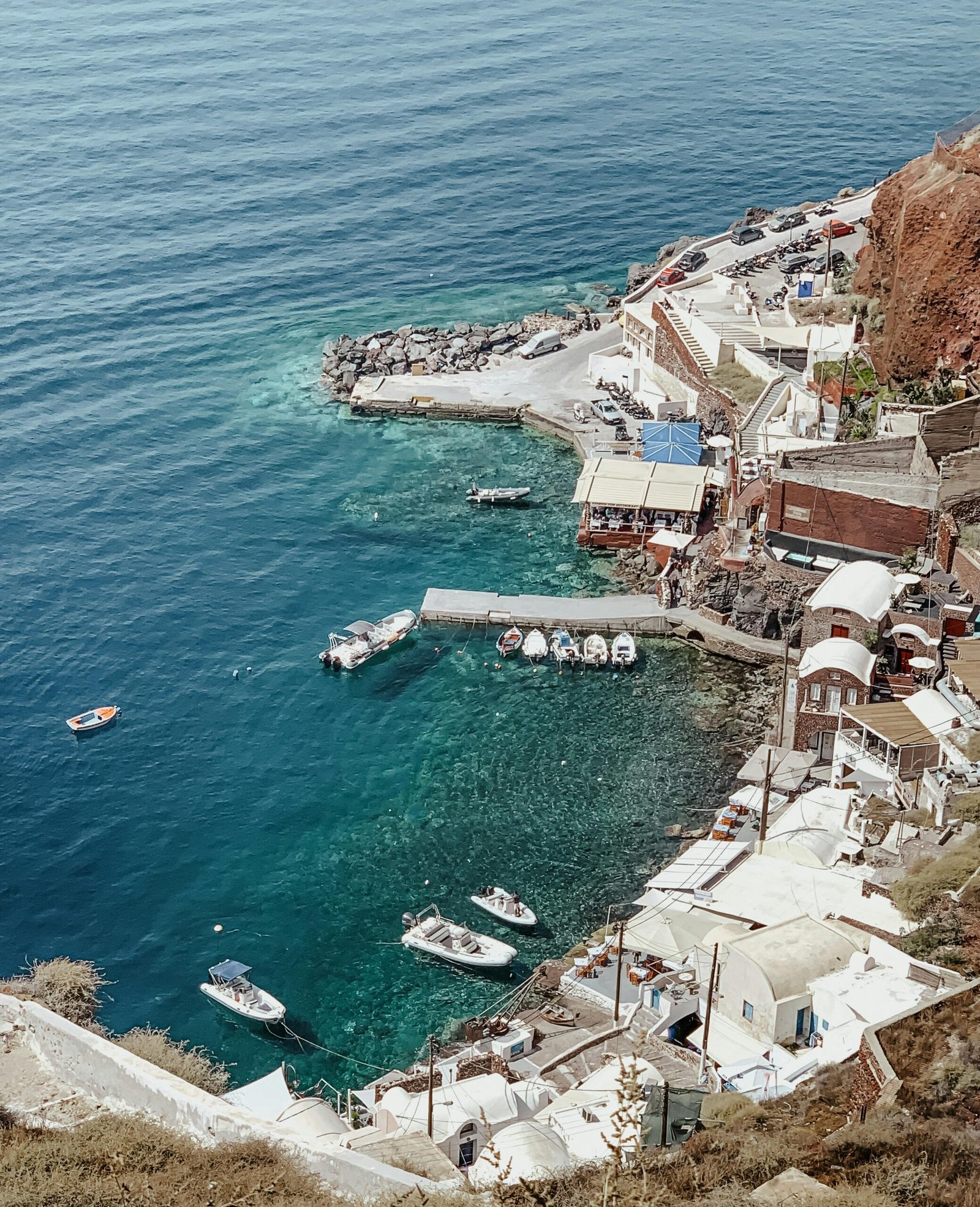
Why Most First-Timers to Santorini Leave Slightly Disappointed starts with a simple assumption: that a famous place will feel as good in person as it looks in photos. That assumption is common, and it is usually wrong in peak season.
The problem is not that Santorini is overrated. The problem is that many visitors arrive expecting a private emotional experience in a place that is, for much of the year, operating at full commercial pressure. Once you understand that gap, the disappointment makes sense.
Why Most First-Timers to Santorini Leave Slightly Disappointed
The expectation problem behind Why Most First-Timers to Santorini Leave Slightly Disappointed
The core mistake is projection. People do not just want to see Santorini; they want it to deliver a feeling they already decided on from screens, ads, and other people’s trip recaps. That is a dangerous way to choose any Greek island, and Santorini exposes it fast.
What first-timers usually expect is ease: clean visual drama, a calm pace, and the sense that every moment will feel special. What they actually meet in peak season is crowd management, premium pricing, and a place where many other travelers are chasing the exact same emotional payoff at the exact same time.
This is why Why Most First-Timers to Santorini Leave Slightly Disappointed is not really a Santorini problem. It is a mismatch between fantasy and operating conditions. Greece rewards travelers who arrive with a plan, but Santorini punishes people who think reputation alone will carry the experience.
Why people choose Santorini anyway
Travelers choose Santorini because it feels safe in the mind. It is famous, easy to explain to friends, and heavily validated by social media and wedding culture. That matters more than people admit. Many first-timers are not selecting the island so much as selecting the emotional certainty that comes with a name everyone recognizes.
There is also a status element. For some travelers, Santorini is not just a destination; it is a proof point. They want the trip to confirm that they made the “right” Greece choice, which creates a lot of pressure before they even arrive.
That pressure is exactly why Why Most First-Timers to Santorini Leave Slightly Disappointed shows up so often in conversations after the trip. The island is carrying too many jobs at once: romance, prestige, relaxation, and visual payoff. No place handles that load cleanly in peak season.
What the emotional gap actually feels like
The emotional gap is usually small at first and then sharp. Travelers land with a high baseline of excitement, then start noticing friction: limited space, constant movement, and the sense that they are sharing every viewpoint, terrace, and meal with a large number of other people doing the same thing.
That is when the fantasy starts to crack. The view is still there, the architecture is still there, and the caldera is still there. But the feeling of ownership people imagined is gone, and once that disappears, the trip can feel more curated than lived.
Here is the counterintuitive part: many first-timers are not disappointed because Santorini is too busy. They are disappointed because it is too legible. They already know the visual script, so the real island has less room to surprise them. Familiarity reduces emotional impact.
If you want the official cultural context for Greece beyond the island hype,
Visit Greece is useful for understanding how destinations are presented nationally. That matters because marketing shapes expectation long before a traveler books a room.
The moment disappointment usually hits
It usually hits when the visitor realizes the island is not giving them solitude just because they paid for a premium location. That moment often comes at the exact point they expected a private, quiet, elevated experience and instead meet queues, noise, or a view shared with a crowd.
For many people, the real letdown is not the first busy walkway or the first expensive meal. It is the moment they understand that the island’s most famous spaces are not designed around their personal pace. The trip becomes an exercise in timing and tolerance, not effortless indulgence.
Why Most First-Timers to Santorini Leave Slightly Disappointed is often a story of expectation collapse at the point of contact. The traveler did not plan for the emotional cost of sharing a destination that has been sold as intimate.
Who is most prone to this pattern
Not every traveler is equally vulnerable. The people most likely to leave underwhelmed are those who want a destination to validate a fantasy rather than reveal a place. That includes honeymooners with rigid expectations, first-time Greece visitors who chose the most famous option by default, and travelers who equate luxury with quiet.
They are often highly organized in the wrong way. They spend serious energy on aesthetics, but not enough on what the island is actually like when it is full. They know what they want the photos to look like, but not what the day will feel like between the photos.
- Travelers chasing a once-in-a-lifetime romantic mood
- First-time visitors who chose Santorini because “everyone goes”
- People who dislike crowds but still book the most crowded Greek destination in peak season
- Travelers who expect luxury to mean privacy rather than premium access
If that list feels uncomfortably specific, that is the point. Why Most First-Timers to Santorini Leave Slightly Disappointed is rarely about bad taste. It is about using the wrong emotional criteria to make the booking in the first place.
Why peak season makes the mismatch worse
Peak season amplifies every false assumption. Prices rise, availability tightens, and the island’s most famous areas become more performance-driven than relaxed. The traveler who expected a graceful, effortless stay instead finds themselves negotiating for space, calm, and timing.
This is where many first-timers make a practical mistake that becomes an emotional one. They book Santorini at the busiest time of year because they want the “best” version of the island, then discover that the best-known version is also the most heavily managed and least forgiving.
That is also why some travelers leave saying the island felt more like a brand than a place. That is a harsh judgment, but I understand why they say it. When a destination is overexposed, the visitor’s job shifts from discovery to adaptation.
For travelers comparing Greece’s major cultural stops with island experiences, the official museum and heritage side of the country is worth understanding too. The Acropolis Museum is a good reminder that Greece’s appeal is not only coastal and not only visual; it also has depth, structure, and context.
What a better approach looks like
The better approach is not lower standards. It is a more accurate goal. If you want Santorini, go because you want Santorini as it actually functions: iconic, busy, polished, expensive, and heavily visited. That is a legitimate choice. It just should not be mistaken for a quiet or effortless one.
Approach the island as a high-demand destination with a strong visual identity, not as a mood machine. That shift changes everything. You stop expecting the island to create your feeling for you, and you start evaluating whether the experience matches your travel style.
That is the reframe behind Why Most First-Timers to Santorini Leave Slightly Disappointed. The issue is not whether Santorini is worth visiting. The issue is whether you are honest about why you want it, and whether the reality of peak season fits that reason.
Greece doesn’t punish inexperience. It punishes unexamined assumptions. The travelers who leave disappointed rarely lacked information — they lacked a framework for using it.
Conclusion
If you recognize yourself in this pattern, that is useful. It means the fix is not to chase a different list of “best” places, but to choose the right Greek destination for the emotional job you actually want done. Santorini can be the right answer, but only when the fantasy has been replaced by a clear-eyed expectation of what peak season really is.
Why Most First-Timers to Santorini Leave Slightly Disappointed is a warning, but also a filter. Once you see the assumption behind the disappointment, you can plan more honestly and avoid turning a famous island into an avoidable letdown.
Greece doesn’t punish inexperience. It punishes unexamined assumptions. The travelers who leave disappointed rarely lacked information — they lacked a framework for using it.
Frequently asked questions
Why do first-time visitors to Santorini often feel disappointed?
Because they arrive expecting a private, effortless emotional experience from a destination that is usually crowded, expensive, and highly managed in peak season.
Is Santorini actually overrated?
Not necessarily. It is often over-idealized. The disappointment usually comes from the gap between the image people build before the trip and the reality of visiting when the island is busy.
What kind of traveler is most likely to be disappointed in Santorini?
Travelers who want privacy, quiet, and a sense of exclusivity are the most vulnerable, especially if they book during the busiest months.
Does peak season change the Santorini experience that much?
Yes. Peak season changes the pace, the crowd level, the pricing, and the amount of effort required to enjoy the island calmly.
What is the biggest mistake first-timers make with Santorini?
They treat its reputation as a guarantee of emotional payoff. Famous does not mean easy, and iconic does not mean intimate.
How should I think about Santorini differently?
Treat it as a high-demand destination with a very specific personality, not as a universal Greece experience. That makes your decision cleaner and your expectations more realistic.